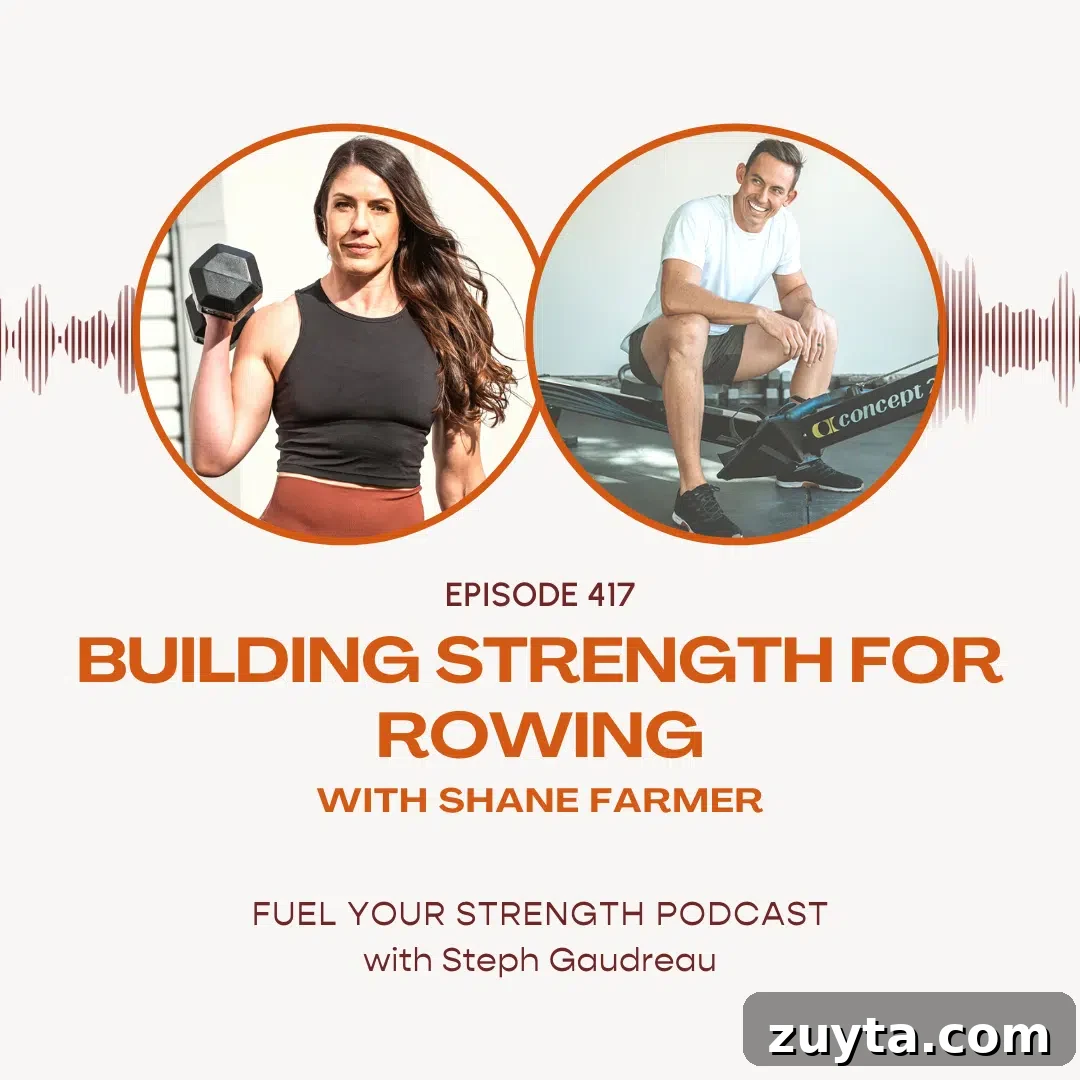
One of the gym tools that intimidates many people is the rowing machine. Often dismissed as a simple warm-up device, it’s actually a versatile and powerful training tool. With the right instruction and a balanced approach to training, rowing can transform fitness—improving strength, conditioning, and overall movement quality.
Or, listen on your favorite streaming platform: iTunes (Apple Podcasts) | Spotify | YouTube
Want a free week of strength workouts? Visit the Steph Gaudreau website to get started.
Watch the Episode on YouTube
Key Takeaways
If you’re curious about rowing, keep these points in mind:
- Approach general physical preparedness (GPP) holistically; address strength, mobility, and aerobic fitness together.
- Integrate rowing in a way that complements your goals—use it as cardio, skill work, or a training accessory.
- Lean on community and experienced coaches for guidance, accountability, and long-term progress.
Changing Lives Through Rowing with Shane Farmer
Shane Farmer turned his passion for rowing into Dark Horse Rowing to help others discover consistent movement, technical skill, and community support. He emphasizes rowing as a tool that fosters accountability, personal growth, and long-term fitness rather than simply producing elite rowers.
Building Community Through Fitness
Shane’s goal is not to convert everyone into competitive rowers, but to show non-rowers how rowing—on and off the machine—can support mobility, conditioning, and quality of life. A core value of his approach is the hyper-local tribe: small, engaged communities that motivate people to show up, move, and improve together.
Diversity is Key
Movement variety matters for longevity. People cycle through seasons of preference—some weeks favor rowing, others favor strength, and sometimes you’ll want mobility or skill work. The ideal approach blends weight training, aerobic work, machine-based sessions, and recovery so you remain engaged and resilient over time. Being proactive about movement is far better than reacting after problems emerge.
Are you ready to add rowing to your routine? Share your experience and questions in the comments below.
In This Episode
- Rowing and CrossFit parallels (11:52)
- How the pandemic shifted training and revived local communities (15:15)
- Common strength issues that limit rowing performance (26:37)
- The importance of ongoing movement as you age (33:15)
- Practical tips for combining rowing and strength training for lasting fitness (41:00)
Quotes
“People are always going to want to gravitate to tribe and community. So as long as it is available, people will gather for fitness purposes.” (18:25)
“I’m not trying to turn you into a rower. I am trying to help you use rowing as an accessory to staying fit for life.” (30:45)
“Submit yourself to the process of learning the movement. Because once it all makes sense, you’re going to find a lot more enjoyment in the workouts.” (33:26)
“There is no magic pill. There’s no ‘rowing is the greatest thing in the world; strength training is the greatest thing in the world’. They are all just a means to facilitate what the body is meant to do.” (37:04)
“We have so much knowledge at this point about what to do that the hardest thing is just choosing what we are going to do on any given day.” (45:52)
Featured on the Show
Apply for Strength Nutrition Unlocked
Dark Horse Rowing
Follow Shane Farmer on Facebook, Twitter (X), Instagram, and YouTube
Follow Steph on Facebook, Twitter, Instagram, YouTube, and Pinterest
Please consider leaving a rating and review on Apple Podcasts if you enjoyed the show.
Podcast production and marketing support by Counterweight Creative.
Related Episodes
FYS #416: Is Muscle Anti-Aging?
FYS #411: Why You Need A Strength Training Program
FYS #409: Overcoming All Or Nothing Thinking In The Gym
Building Strength for Rowing with Shane Farmer Transcript
This conversation between Steph Gaudreau and Shane Farmer explores how rowing can be a powerful element of a well-rounded fitness routine, especially for athletic people over 40 who want to combine strength, conditioning, and longevity.
They open by reframing the rowing machine: not just a warm-up, but a skill-based tool that demands education. Shane describes his journey—discovering rowing in college, transitioning into coaching and CrossFit, and founding Dark Horse Rowing. He credits CrossFit with increasing rowing’s visibility and professionalizing coaching, which helped make rowing accessible to many nontraditional participants.
Shane and Steph examine the pandemic’s impact on fitness: a surge in home equipment purchases and connected fitness, followed by a settling into hybrid models. The major takeaway is that people crave community and local connection; long-term success in fitness often comes from integrating online coaching with genuine local engagement.
Technically, Shane highlights common strength deficits that affect rowing performance. Elite rowers often lack specific trunk and push strength because their training historically emphasizes high-repetition, low-load work that mirrors the stroke. Shane recommends complementing erg practice with strength work that develops pushing ability, loaded hinging and hip drive, trunk thickness (for stability under load), and dynamic stability through carries and heavy-loaded movements. He also stresses the importance of developing often-neglected muscles like the serratus anterior to reduce overuse injuries.
For non-rowers using the erg for general physical preparedness, Shane advises moderation of volume and a commitment to learn proper technique. Rowing is a skill; investing time in drills and coached feedback dramatically increases both efficiency and enjoyment. Education, he says, is the single most valuable investment a person can make.
The conversation then turns to programming and life-stage training. Shane separates strength and aerobic work into focused blocks—prioritizing hypertrophy and strength sessions alongside designated aerobic days—so each domain receives attention without compromising recovery. He advocates a blend of modalities for overall resilience: strength, aerobic conditioning, mobility, and functional play. He also encourages people to accept seasons of training—some phases will favor rowing, others strength or combat sports or mobility work—and to remain consistent over the long term.
Shane shares upcoming projects: a Dark Horse app that alternates rowing and GPP sessions to provide a balanced track, plus MyRow, a prototype connected-device concept built to support coaching rather than mere entertainment. His core mission is developing coaches who deliver practical, human-centered guidance that fosters lasting change in athletes’ lives.
Throughout the episode, the emphasis is on sustainable practice: prioritize local community, pursue continual education, and combine varied training tools—rowing included—to build long-term fitness, resilience, and joy in movement.
To access show notes and resources mentioned in this episode, visit Steph Gaudreau’s website and consider subscribing to the podcast and YouTube channel for future episodes and updates.