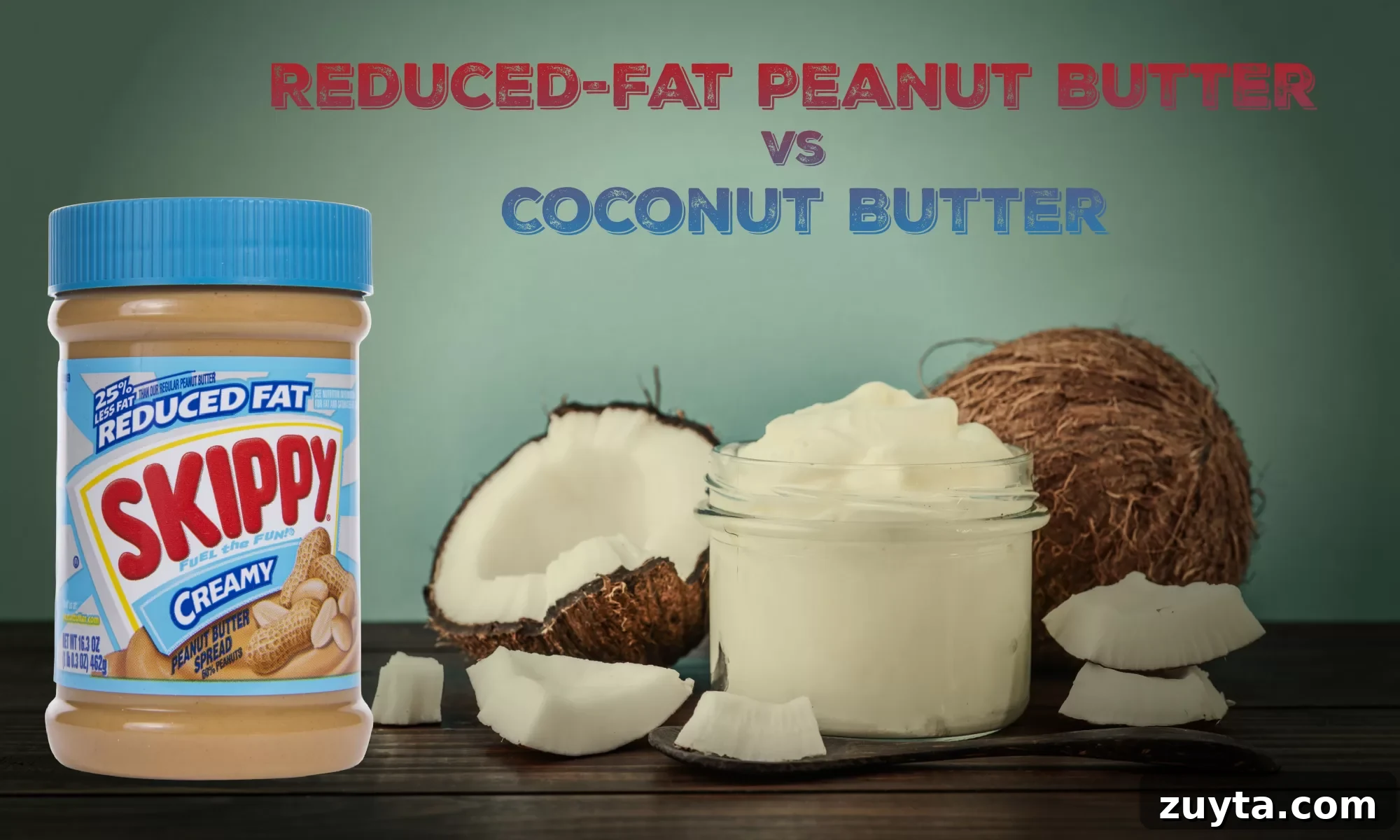
Do you sometimes crave peanut butter but hesitate because of the fat content? If so, reduced-fat peanut butter could be a good compromise. It lets you enjoy peanut flavor with less fat, which can help if you’re tracking macros. Below we take a close look at reduced-fat peanut butter and compare it to coconut butter to help you decide which spread suits your needs.
Coconut butter delivers a distinct tropical flavor and creamy richness that evokes warm, beachy vibes. It offers a very different taste and nutritional profile from peanut spreads, so the comparison comes down to flavor, texture, dietary compatibility, and nutrition.
Let’s place them side by side and examine their ingredients, uses, storage, and nutritional differences to see whether reduced-fat peanut butter or coconut butter is the better fit for you.
Let’s jump in!
Comparing reduced-fat peanut butter vs coconut butter
Reduced-fat peanut butter is made from peanuts and often contains soy-derived ingredients, so common allergens include peanuts and soy. Coconut butter is made from coconut flesh, so coconuts are the primary allergen; though the USDA classifies coconuts as tree nuts, many people with tree-nut allergies tolerate coconut—check with your doctor if you’re unsure.
Both spreads are thick and suitable for vegan diets. Coconut butter is also popular in paleo and keto approaches because it is lower in carbohydrates and higher in saturated fat, while reduced-fat peanut butter typically contains more carbs and added ingredients to improve texture and flavor.
Glycemic index data for reduced-fat peanut butter isn’t widely reported, but it’s likely similar to regular peanut butter and therefore low. Coconut butter is expected to be low GI as it’s made from coconut flesh. If you manage blood sugar, consult a healthcare professional for personalized advice.
| Reduced-fat peanut butter (Jif brand) | Coconut butter | |
| Taste | Mild peanut flavor, slightly sweet | Coconut, rich, slightly nutty |
| Texture | Thick, smooth & creamy (or crunchy) | Thick, pasty, slightly gritty |
| Allergens | Peanuts, soy | Coconuts* |
| Vegan? | Yes | Yes |
| Paleo? | No | Yes |
| Keto? | No | Yes |
| Glycemic index (GI) | Unknown; likely low like regular peanut butter (14) | Low** |
*The USDA classifies coconuts as tree nuts, but many people with tree-nut allergies can still consume coconut products. Consult a physician if you have concerns.
**Coconut butter is made from coconut flesh, which has a glycemic index in the low range. Although precise GI data for coconut butter is limited, it is generally expected to be similar to coconut flesh.
What is reduced-fat peanut butter?
Reduced-fat peanut butter starts with roasted peanuts that are ground into a spread. To lower the fat, some of the natural oils are removed. That reduces overall fat content—often by roughly 30% compared with regular peanut butter—but can also change texture and flavor. Manufacturers commonly add sweeteners, protein concentrates, and vegetable oils to improve taste and mouthfeel.
What is coconut butter?
Coconut butter is made by grinding the white flesh of the coconut into a thick, slightly gritty paste. Small bits of coconut flesh create a characteristic texture. Warming coconut butter softens it into a runnier consistency, increasing its versatility in recipes and spreads.
Differences between reduced-fat peanut butter and coconut butter
The most noticeable differences are taste and texture.
Reduced-fat peanut butter tastes like a milder, slightly sweet peanut spread and comes in smooth or crunchy varieties. Coconut butter tastes distinctly of coconut with a mild nutty note and tends to be pasty and slightly gritty unless warmed.
Beyond sensory differences, the spreads vary in diet compatibility: coconut butter often fits paleo and keto plans due to lower carbs, while reduced-fat peanut butter may contain added sugars and carbs that make it less suitable for low-carb diets.
How to use reduced-fat peanut butter vs coconut butter
Both spreads are versatile. Use them on toast, waffles, or pancakes; whisk them into smoothies and oatmeal; or incorporate them into baked goods. Reduced-fat peanut butter’s smooth or crunchy textures allow you to change mouthfeel in recipes, while coconut butter brings a tropical richness and can be melted to dress fruit, drizzle over desserts, or enrich sauces.
Keep in mind their distinct flavors and allergens when swapping them in a recipe.
Nutrition: Reduced-fat peanut butter vs coconut butter
Reduced-fat peanut butter generally has less fat than regular peanut butter but often contains added sugar and other ingredients. A typical 2-tablespoon serving provides protein, fiber, and more carbohydrates than coconut butter, so it’s not ideal for strict keto diets.
Coconut butter has fewer net carbs and more fiber, with lower protein but much higher saturated fat. That high saturated fat content is something to monitor if you’re watching heart-health-related metrics.
| Serving size: 2 tbsp | Reduced-fat peanut butter (Jif brand) | Coconut butter |
| Calories | 190 | 210 |
| Total fat (saturated) | 12 g (2.5 g) | 22 g (18 g) |
| Total carbs | 15 g | 8 g |
| Net carbs (fiber) | 13 g (2 g) | 2 g (6 g) |
| Total sugars (incl. added) | 4 g (3 g) | 2 g (0 g) |
| Protein | 7 g | 2 g |
How to store reduced-fat peanut butter and coconut butter
Natural reduced-fat peanut butter without preservatives benefits from refrigeration to extend shelf life and minimize oil separation. Commercial shelf-stable reduced-fat peanut butters often contain stabilizers and can be stored at room temperature in a pantry.
Coconut butter is typically shelf-stable and can be kept at room temperature; refrigeration will firm it up but also extend its freshness. Typical unopened shelf life ranges up to several months; check the label for brand-specific guidance.
Always follow the manufacturer’s best-before date and storage instructions for both products.
Reduced-fat peanut butter vs coconut butter: The ultimate verdict
Which is better depends on your priorities. Reduced-fat peanut butter is a sensible choice if you want a lower-fat peanut spread with familiar flavor and texture options. Coconut butter offers broader dietary flexibility for low-carb and paleo plans, no added sugar in many varieties, and a unique flavor—but it is high in saturated fat.
If you want one recommendation: choose coconut butter for versatility and fewer added sugars, but be mindful of saturated fat intake. Buying both lets you use each where it best fits: peanut for classic peanut flavor and texture, coconut for low-carb baking, sauces, and tropical flavor boosts.
FAQs
Reduced-fat peanut butter has about 30% less fat than regular peanut butter.
The healthiest peanut butters are typically natural varieties without added oils, preservatives, or sugar. Because reduced-fat peanut butter often includes added ingredients to improve flavor and texture, it may not be the healthiest choice compared with a simple, natural peanut butter.
Coconut butter is much lower in net carbs than reduced-fat peanut butter, making it the better option for most keto diets.
You probably can, but consult your physician. Although the USDA lists coconuts as tree nuts, many people with tree-nut allergies tolerate coconut products.
“Reduced-fat” means some of the natural oils have been removed from the peanut butter, lowering its overall fat content. This process can change the texture and flavor, which is why manufacturers may add other ingredients to compensate.