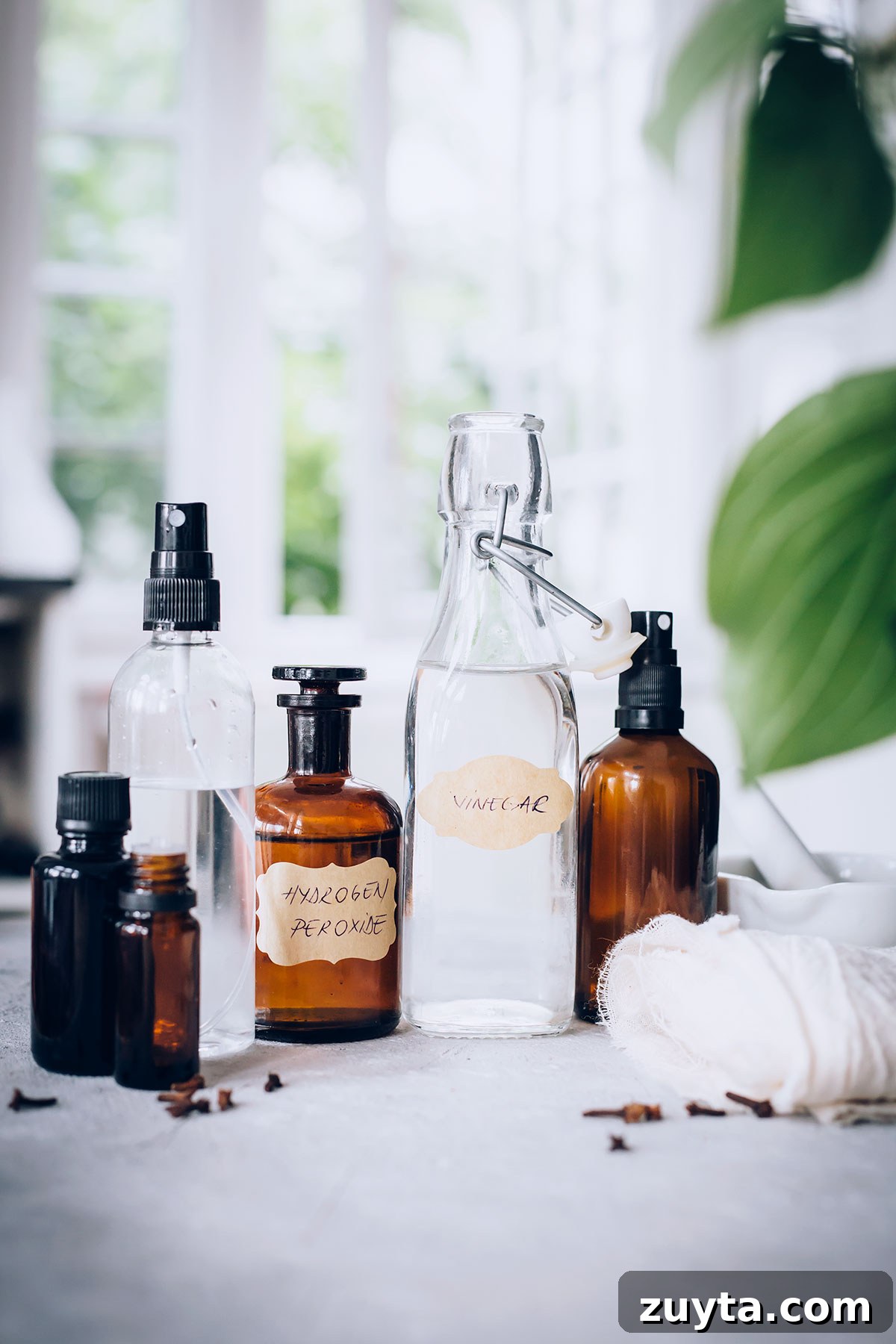
In recent years I’ve moved in the opposite direction from a germaphobe. For everyday wipe-downs I often use a damp cloth and a simple homemade foaming soap to wash hands. Call me a cleaner-a-phobe — I prefer low-fuss, low-toxicity routines. Still, I wanted a reliable, all-purpose kitchen cleaner that felt safe around food and kids. The combination that finally worked for me: hydrogen peroxide and distilled white vinegar.
How to use hydrogen peroxide and vinegar together
Used correctly, these two common household ingredients make an effective cleaning system. The method is simple: keep the solutions in separate spray bottles and apply one spray right after the other to the surface you want to clean — counters, cutting boards, produce and other food contact surfaces. Research, including tests conducted at Virginia Polytechnic Institute and State University, showed that misting surfaces with vinegar then hydrogen peroxide (or vice versa) substantially reduced common pathogens such as Salmonella, Shigella and E. coli, often outperforming standard kitchen cleaners in those trials.
In tests run at Virginia Polytechnic Institute and State University, pairing the two mists killed virtually all Salmonella, Shigella, or E. coli bacteria on heavily contaminated food and surfaces when used in this fashion, making this spray combination more effective at killing these potentially lethal bacteria than chlorine bleach or any commercially available kitchen cleaner.
Simple all-purpose hydrogen peroxide + vinegar cleaner recipe
This system requires two separate spray bottles. For attractive glass bottles with a good spray head, many people prefer clear, reusable bottles for the vinegar mix and a dark or opaque bottle for hydrogen peroxide so light doesn’t break it down.
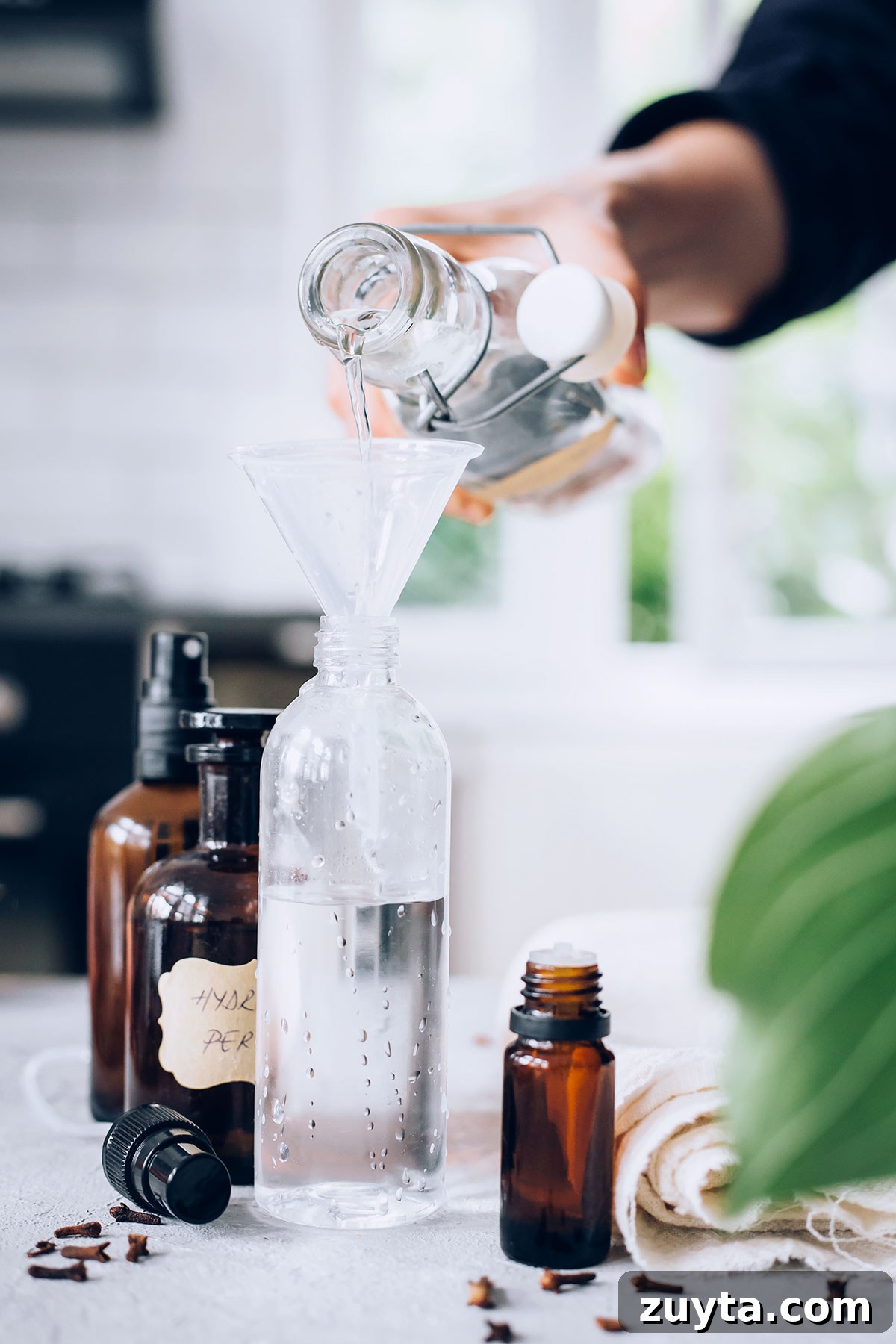 In the first spray bottle, combine:
- 1 1/2 cups distilled white vinegar
- 5 drops tea tree essential oil (optional)
- 5 drops clove essential oil (optional)
- Fill the rest of the bottle with water
Vinegar has a strong scent, so adding a few drops of a pleasant essential oil can make the solution more pleasant to use. Clove, cinnamon or citrus oils are common choices; clove oil is often used for its antimicrobial scent profile. If you prefer fragrance-free cleaning, omit the oil and use plain diluted vinegar.
In the second bottle, pour store-bought 3% hydrogen peroxide. Use a dark-colored bottle or keep the bottle in a dark cabinet because peroxide degrades when exposed to light. Label both bottles clearly so you don’t mix them up.
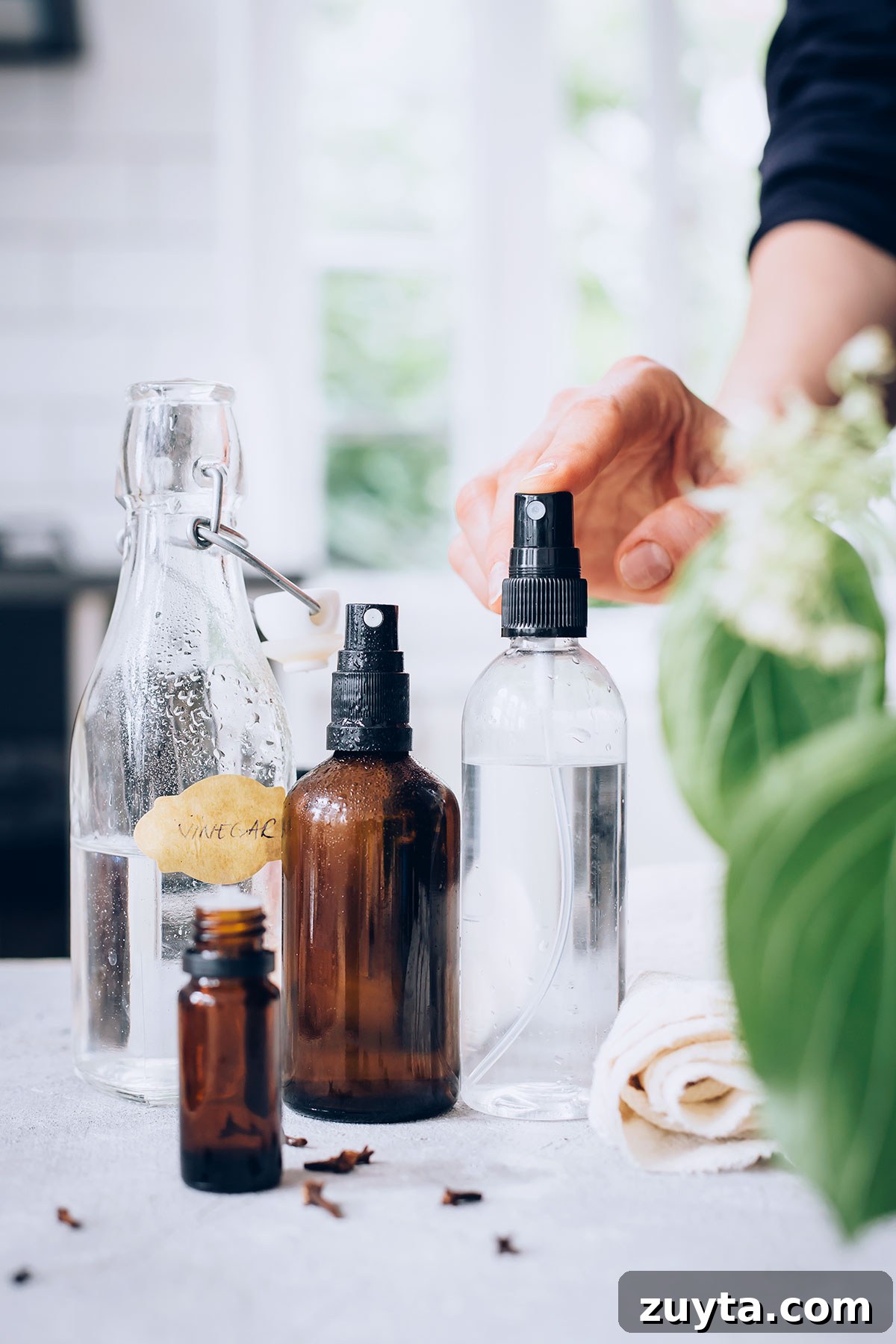
Warning: Don’t put vinegar and hydrogen peroxide together in the same bottle
Never mix vinegar and hydrogen peroxide in the same container. When combined directly, they can form peracetic acid, which can be irritating and potentially harmful at higher concentrations. Keeping them in separate bottles and applying them sequentially avoids this risk.
How to apply and safety tips
To clean a surface: spray the vinegar solution evenly, then immediately follow with a mist of hydrogen peroxide. Let the surface remain wet for at least 30 seconds to a minute to allow contact time, then wipe with a clean cloth or rinse if the surface will contact food directly. For produce, spray lightly and rinse with water after a short dwell time.
General safety tips:
- Use standard 3% hydrogen peroxide from the drugstore; higher concentrations require extra caution and protective gear.
- Store hydrogen peroxide in its original, opaque container or another dark bottle and keep both solutions labeled and out of reach of children and pets.
- If you have sensitive skin, wear gloves while cleaning and avoid inhaling concentrated sprays — ventilate the area if needed.
More ways to use vinegar around the home
Once you have a jug of distilled white vinegar on hand, it can be used in many cleaning and household tasks. In the kitchen you can use vinegar to clean cutting boards, descale coffee makers, freshen garbage disposals, and as a produce rinse when followed by a water rinse. In the laundry room vinegar can act as a fabric softener alternative, help remove odors, and refresh washing machines. Around the rest of the home, diluted vinegar can help remove sticker residue, deter ants in problem areas, clean microfiber furniture (with the correct method), dust surfaces, and clean wood or laminate floors when mixed with appropriate ratios of water.
Keep in mind that vinegar is acidic and can damage certain surfaces (stone countertops, some hardwood finishes, and waxed surfaces), so always test a small hidden area first before using it widely.