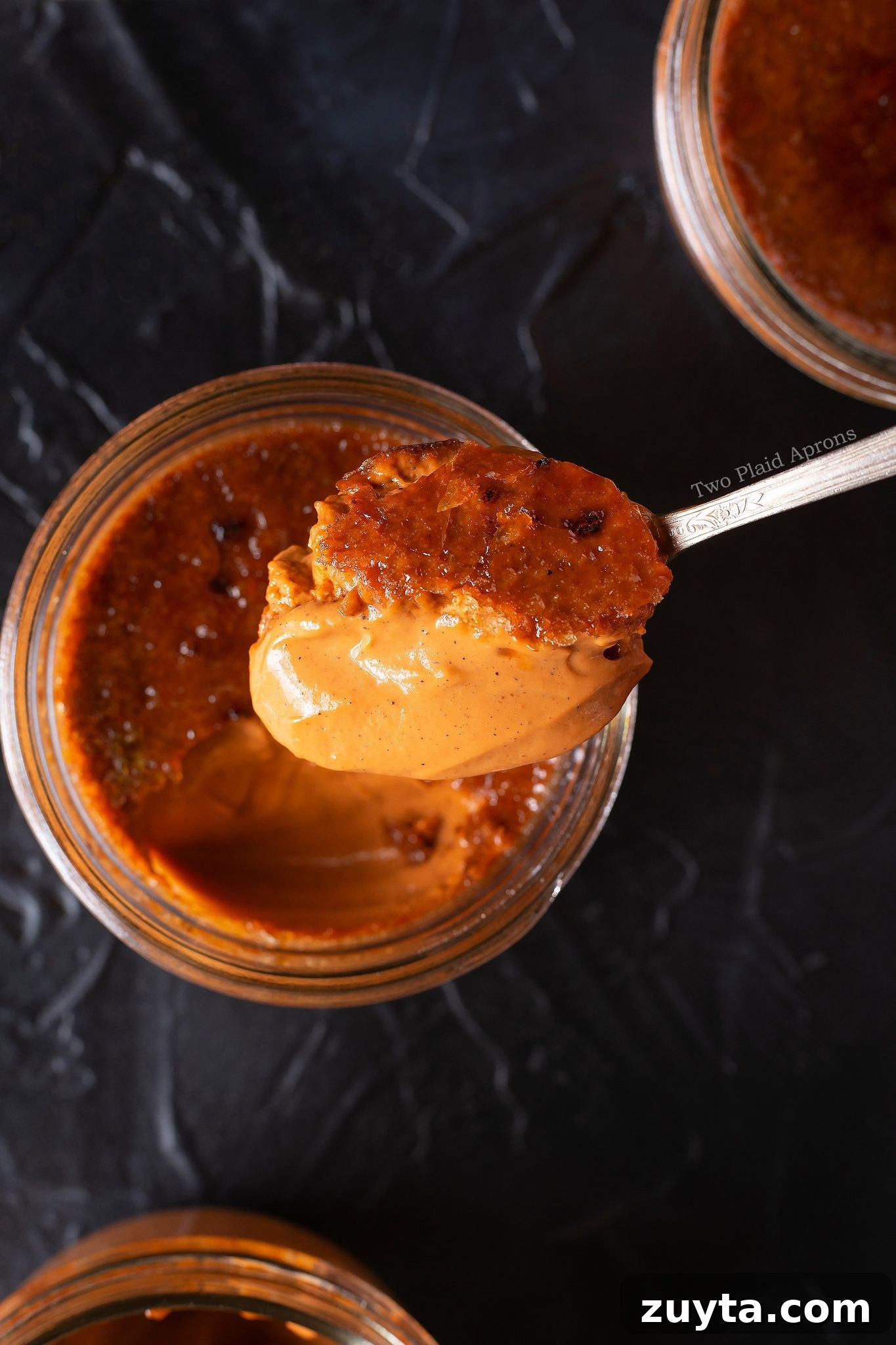
This Thai tea crème brûlée is the silky-smooth custard version of iced Thai tea, perfectly sweetened with condensed milk and finished with a crisp caramel top.
Maybe it’s the hint of autumn in the air, or memories of heading back to school, but I had a sudden craving for Thai tea. In college, my friends and I often went to Song Phi Nong, the best Thai restaurant near campus. One thing that stuck with me was their Thai tea—the bright orange color when mixed with condensed milk was irresistible. If I weren’t lactose intolerant, I’d probably have it every day.
I decided to transform that flavor into a dessert: Thai tea crème brûlée. It captures all the familiar notes of Thai tea—vanilla and sweetened condensed milk—in a rich, silky custard. Think Thai tea in custard form: comforting, aromatic, and indulgent.
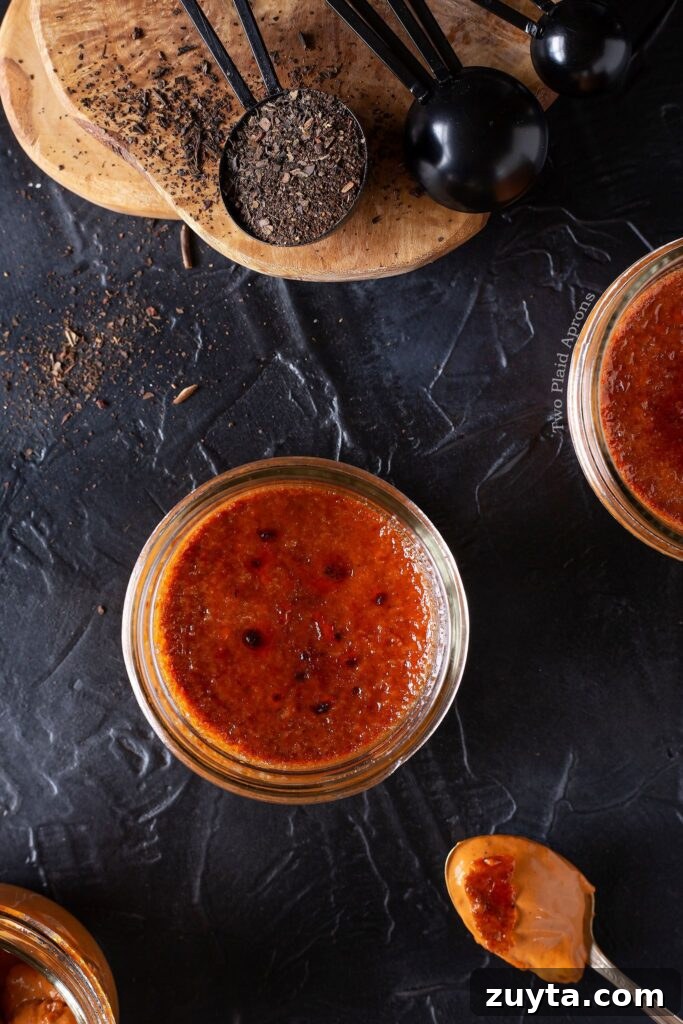
What does crème brûlée taste like?
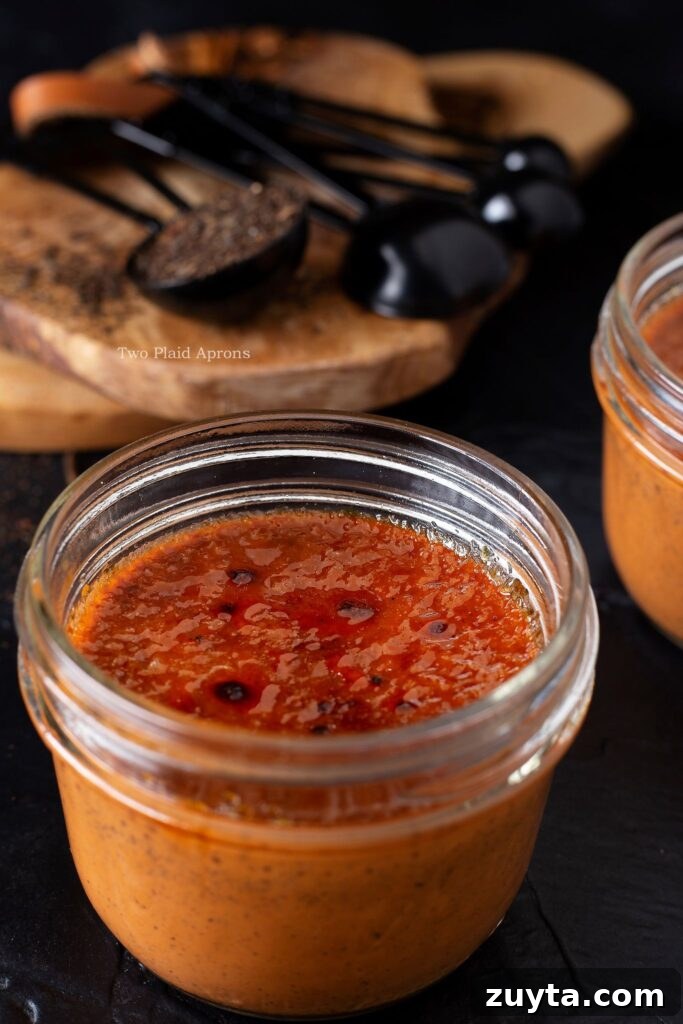
Classic crème brûlée is usually vanilla based, but the format is flexible and accepts many flavors. A proper crème brûlée tastes creamy, lightly sweet, and exceptionally smooth, with a thin glassy layer of caramelized sugar that snaps when tapped. In this Thai tea version, the custard tastes like sweetened Thai tea—deeper and richer because it’s concentrated in a custard base.
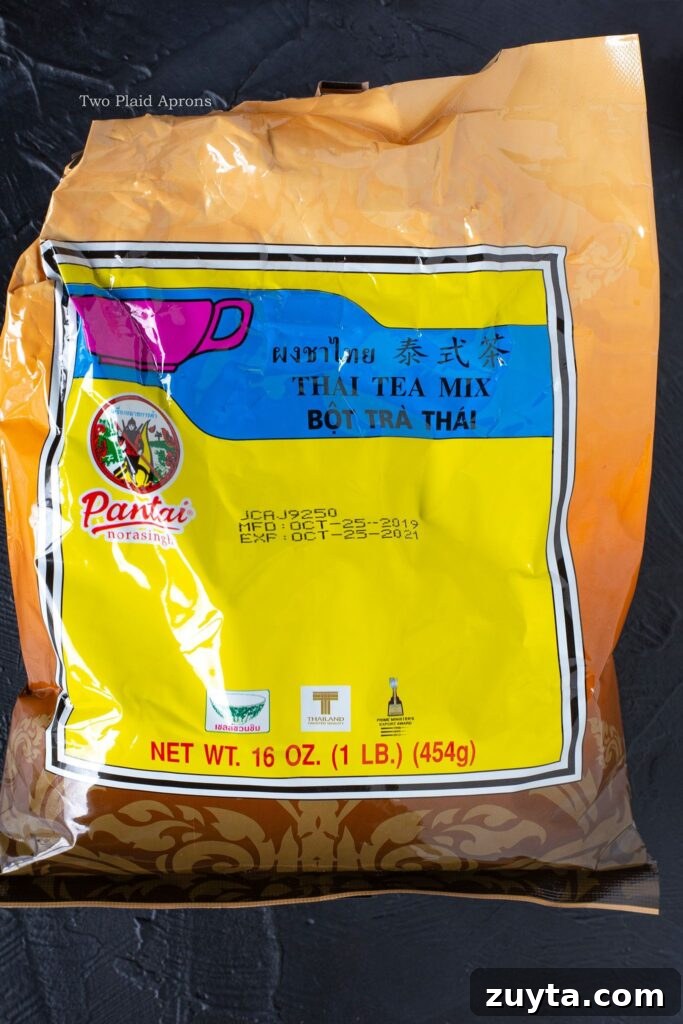
What Thai tea should I use?
Choose a Thai tea blend that is aromatic and produces that warm orange color. A good retail Thai tea mix will deliver the characteristic vanilla and spice notes you associate with restaurant-style Thai tea. Use the amount called for in the recipe and adjust steeping time to intensify or mellow the flavor to your preference.
Why do some crème brûlées taste eggy?
An eggy flavor usually means the yolks were overcooked or scrambled during preparation. To prevent this, temper the yolks by slowly adding hot cream while whisking, bake the custard in a water bath to ensure gentle, even cooking, and avoid over-baking. Proper technique yields a smooth, custardy result rather than a curdled or eggy one.
Temper the egg yolks
Tempering is essential for any yolk-based custard. It means bringing the cool egg mixture up to temperature gradually by slowly adding the hot cream while whisking constantly. This prevents the yolks from seizing or forming lumps. Take your time and drizzle the hot Thai tea–infused cream into the yolks in a steady stream while whisking.
How do I know when crème brûlée is done baking?
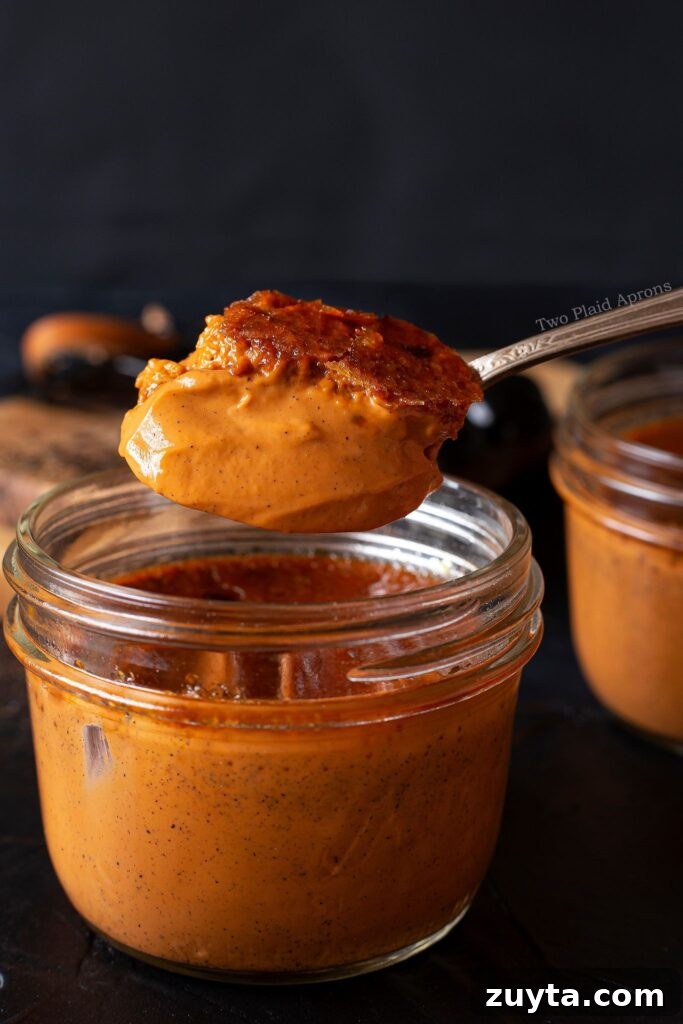
A properly baked crème brûlée should be set around the edges but still slightly jiggly in the center when you remove it from the oven. The center will continue to set as the custard cools. If the entire surface is firm and not slightly wobbly, it may be overcooked.
Why is my crème brûlée not thickening?
If the custard remains runny, it was probably undercooked or the eggs were not properly incorporated. Overcooking can also create a curdled texture rather than a thick one. The egg yolks act as the primary thickener, so make sure you use the correct number of yolks and follow the baking time and temperature guidelines.
Why use a water bath?
Baking crème brûlée in a water bath (bain-marie) provides gentle, even heat around the ramekins, preventing sudden temperature spikes that can curdle the custard. Place the filled ramekins in a deep baking dish and add hot water halfway up the sides of the ramekins before baking. To avoid spills, you can place the pan in the oven first and then pour in the hot water.
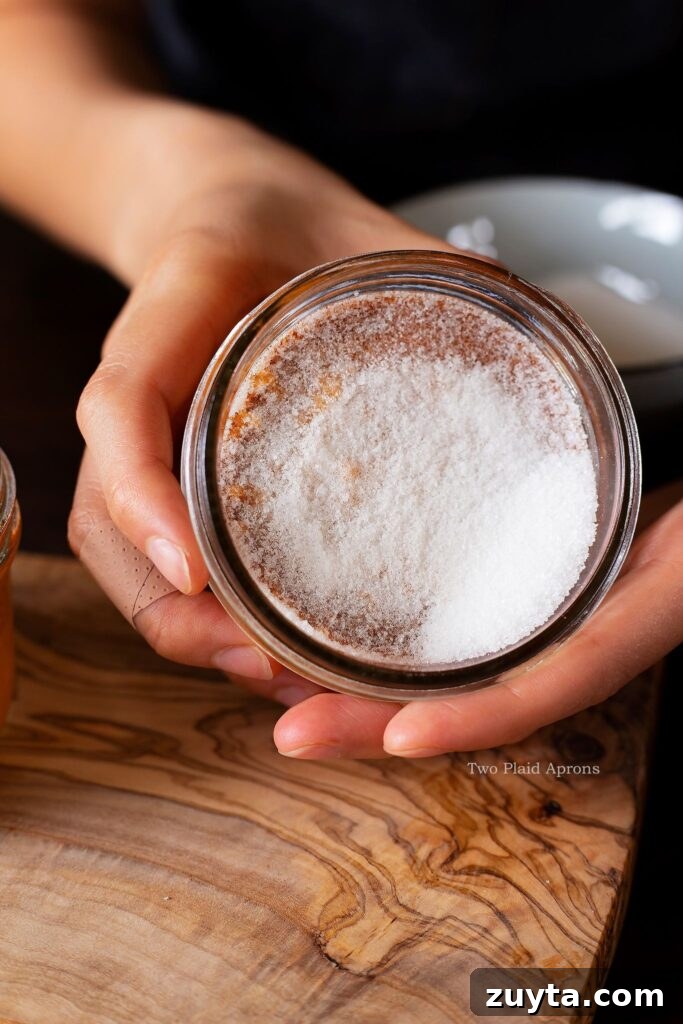
What sugar is best for brûléeing?
Plain granulated white sugar is ideal for creating the caramelized top. It melts evenly, reaches the right amber color quickly, and cools into a clear, crisp caramel glass that gives the classic crack when tapped.
Why did my crème brûlée curdle in the oven?
Curdling usually indicates the oven was too hot or the custard baked too long. Overcooking causes the proteins in the eggs to tighten and squeeze out moisture, resulting in a grainy, separated texture. Bake at the correct temperature and check for the slight jiggle in the center to avoid this.
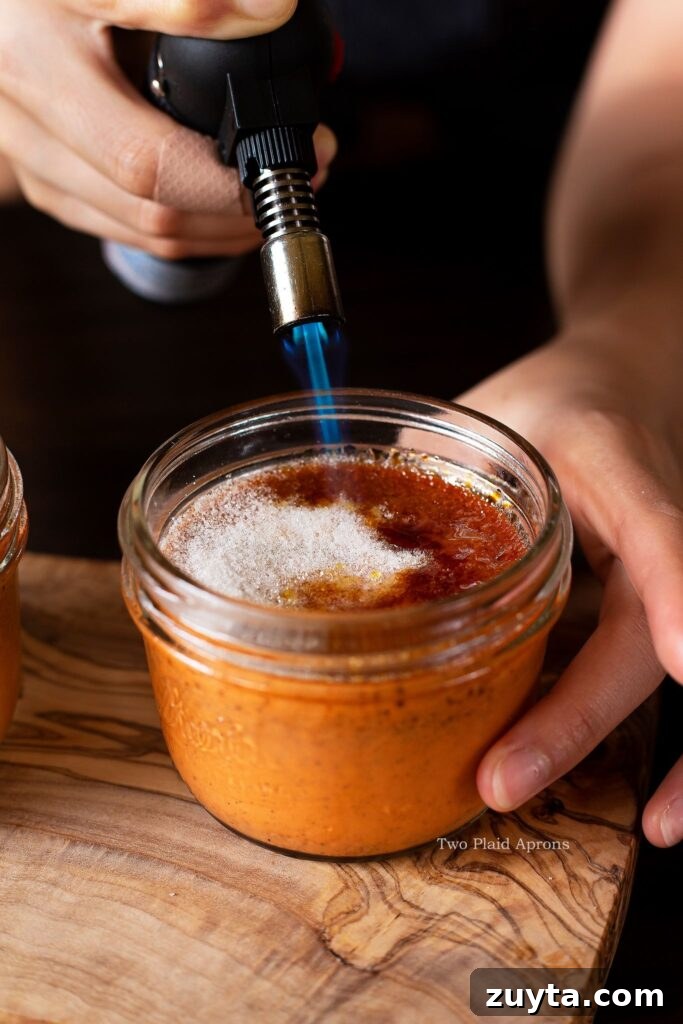
How do I caramelize the top without a kitchen torch?
A kitchen torch is the most reliable tool for caramelizing because it heats only the sugar on top without warming the custard beneath. If you don’t have a torch, you can use your oven broiler: place the custards on the top rack, preheat the broiler to high (around 450°F), and broil in 20–30 second bursts until the sugar is golden. Watch closely—sugar can go from golden to burnt in seconds.
If you enjoy Asian desserts, you might also like these ideas:
- Coconut mango tapioca pudding
- Brown sugar boba ice cream bars
- Japanese cotton cheesecake
- One-egg matcha soufflé pancake
Bake with love!
Mei ❤️
If you make this recipe, please share photos on social media and tag the original creator if you can—we love seeing your results! 🥰
📖 Recipe
Thai Tea Crème Brûlée
This Thai tea crème brûlée is the silky-smooth custard version of an iced Thai tea that’s perfectly sweetened with condensed milk.
Prep Time: 10 mins • Cook Time: 30 mins • Chill Time: 2 hrs 10 mins • Total Time: 2 hrs 50 mins
Yield: 3 (8-ounce ramekins)
Ingredients
- 2 cups heavy cream
- ½ cup milk
- ½ cup Thai tea mix
- 4 large egg yolks (save the whites for another use)
- ½ cup sweetened condensed milk
- 2 tablespoons granulated sugar (for brûlée)
Instructions
- Preheat the oven to 300°F. Prepare hot water for the water bath.
- Combine the heavy cream, milk, and Thai tea mix in a saucepan. Heat over medium, stirring occasionally, until it comes to a boil. Remove from heat and let the tea steep for 5–10 minutes to infuse flavor.
- Strain the cream and milk through a fine-mesh strainer or cheesecloth to remove tea leaves. Discard the solids.
- In a heatproof bowl, whisk the egg yolks with the sweetened condensed milk until smooth. Slowly drizzle the hot strained cream into the egg mixture while whisking continuously to temper the yolks. Continue until fully combined.
- Divide the custard evenly among three 8-ounce ramekins. Place the ramekins in a deep baking dish and pour hot water into the dish until it reaches halfway up the sides of the ramekins.
- Bake for 25–30 minutes, or until the edges are set and the centers are slightly jiggly. Remove ramekins from the water bath and let cool to room temperature. Chill in the refrigerator for at least 2 hours, up to 3 days.
- When ready to serve, sprinkle a thin, even layer of granulated sugar over each custard. Use a kitchen torch to caramelize the sugar until golden and crisp. If using the broiler, place custards on the top rack and broil in short 20–30 second bursts, watching closely to prevent burning.
- Allow the caramelized sugar to cool and harden for a few seconds, then serve.
Recommended equipment
- 8 oz ramekins or small jars
- Fine mesh strainer or cheesecloth
- Kitchen torch (optional, for best results)
- Deep baking dish for water bath
Nutrition (per 8 oz serving)
Calories: 806 kcal • Carbohydrates: 43 g • Protein: 10 g • Fat: 68 g • Saturated Fat: 41 g • Cholesterol: 369 mg • Sodium: 148 mg • Potassium: 375 mg • Sugar: 38 g • Vitamin A: 2707 IU • Vitamin C: 2 mg • Calcium: 309 mg
Keywords: crème brûlée, custard, Thai tea