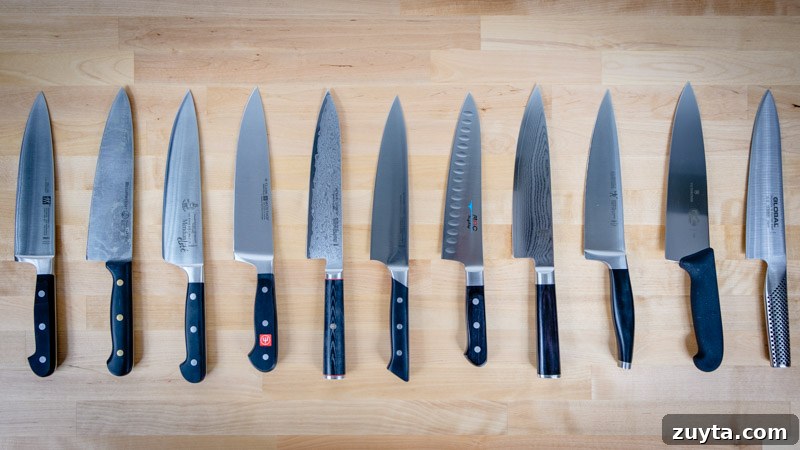
One of the most important tools in any kitchen is a reliable chef knife. From home cooks just starting out to experienced culinary professionals, the right knife makes food preparation faster, safer, and more enjoyable.
Choosing the best chef knife for your needs depends on many factors: how you cook, what you prepare most often, your budget, and how the knife feels in your hand. Before comparing blades and brands, it helps to understand basic knife anatomy so you can evaluate features and performance with confidence.
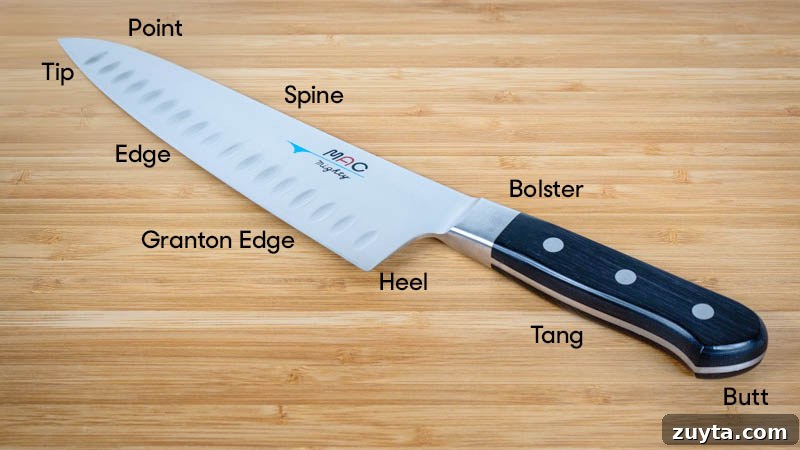
- Butt: The back end of the handle, where the tang typically finishes.
- Heel: The rear portion of the blade nearest the handle; useful for heavy chopping.
- Tip: The front section of the blade used for delicate work and precise cuts.
- Point: The very end of the blade used for piercing and detailed tasks.
- Edge: The sharpened side of the blade that does the cutting.
- Spine: The top, thicker side of the blade. Some chefs rest a finger on the spine for control, but most recommend proper grip techniques instead.
- Tang: The metal extension of the blade that runs into the handle. A full tang increases balance and durability.
- Bolster: The thick junction between handle and blade. A full bolster can add weight and safety; a half bolster offers easier sharpening. Some modern knives have no bolster.
- Granton Edge: Small scallops or dimples along the blade intended to reduce sticking when slicing moist or sticky foods.
Here are some important aspects to consider:
Knife Size
Blade length matters. For many home cooks, an eight-inch (20 cm) chef knife strikes the best balance between versatility and control. It handles most vegetables, fruits, and proteins without feeling cumbersome. Longer blades—10 to 13 inches—can be useful for specialty tasks or professional use but can reduce maneuverability for everyday prep. Shorter blades excel at fine work and are easier to handle for those with smaller hands.
Features
Knives vary widely in construction and features: full tang versus partial tang, presence or absence of a bolster, different handle materials, and blade finishes such as polished, hammered, or Granton edges. None of these is universally “best”; they change how a knife feels, how it performs, and how it’s maintained. For example, a full tang generally improves durability and balance, while a lightweight knife may reduce wrist fatigue for frequent chopping.
When evaluating features, check balance, handle comfort, and blade geometry. The right combination for you depends on how you hold the knife and the tasks you perform most often.
Cutting Performance
Always test a knife if possible. A knife that looks great in a box may feel awkward when you use it. Try it on a variety of kitchen tasks to assess edge retention, balance, and control:
- Herbs: Can you mince leaves cleanly without bruising them?
- Vegetables: Do carrots and celery slice cleanly, or do they splinter?
- Squash and dense vegetables: Does the blade feel stable and strong enough to slice through firm skin?
- Poultry and meat: Can you butterfly a chicken breast or portion meat without excessive force?
Consider how the knife performs over time. A high-quality blade that holds an edge longer will require less frequent sharpening, which can be a real convenience for busy cooks.
Beyond performance, also think about care and maintenance. Some steels require hand washing and careful drying to avoid corrosion; others can be more forgiving. Regular honing keeps the edge aligned, while occasional professional sharpening restores the blade’s original geometry.
Ultimately, the best chef knife is the one that fits your hand, suits your cooking style, and makes you excited to prepare meals. Test knives in person when you can, read reputable reviews, and prioritize comfort and control over flashy specifications.
When you find a knife that feels right, try it out on a favorite dish—such as a succulent gourmet pork rib roast—to see how it performs during real meal preparation.