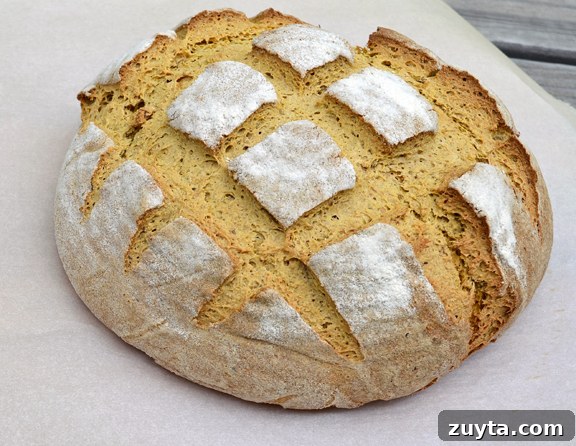
Pureed carrots give this loaf a warm yellow color and a moist, tender crumb.

Last week I brought my sourdough starter out of the refrigerator after it had been resting for a while. My granddaughter wanted to learn to make real bread — not the packaged kind from the grocery store — and I couldn’t resist. At thirteen she already loves good food, and teaching her to bake was a joy.
Instead of repeating a familiar recipe, we experimented and developed a new loaf together. The process turned into a practical food-science lesson: why wild yeast needs much longer to ferment than instant yeast, and how hydration and flour choice affect texture. We spent the day baking and making treats like almond butter bites and mango frozen yogurt. Cooking with someone you love is a wonderful way to pass down skills and traditions, and it made the whole day memorable.
A Note About the Ingredients
Carrots: The carrots don’t make the bread taste strongly of vegetables. Their role is primarily to add color and moisture, contributing to a soft, tender crumb. You can substitute other purees—zucchini, squash, pumpkin, sweet potato, apples, or pears—if you prefer. We used baby food carrot puree purely for convenience; fresh-cooked and pureed carrots work equally well.
10-Grain Flour: This blend typically contains wheat, rye, triticale, oats, corn, barley, soy, brown rice, millet, and flaxseed. It adds flavor and texture but usually lacks sufficient gluten on its own to support a high-rise loaf. In this recipe I used only one cup of the blend because some of it had already gone into making the starter. If your starter is made from traditional wheat flour, you can increase the proportion of multi-grain flour and reduce the all-purpose flour. For a fully whole-grain loaf, substitute white whole wheat for the all-purpose flour, but expect a denser shape unless you adapt hydration and kneading accordingly.
Kamut: Kamut is an ancient wheat variety with a naturally golden hue and a rich, nutty flavor. It tends to be softer and lower in gluten than modern hard wheats, which yields a pleasant texture and color in the finished bread.
A Note About Sourdough Starters
If you’re new to sourdough, nurturing and maintaining a starter is straightforward and worthwhile. A well-kept starter adds depth of flavor and improves the loaf’s texture. If you’ve had trouble with a dormant, sluggish, or overactive starter in the past, there are many practical troubleshooting approaches: feeding schedule, flour choice, temperature management, and occasional reviving methods. I’m happy to answer specific questions about starter care.
- 2 cups ripe sourdough starter
- 2 cups unbleached all-purpose flour
- 3/4 cup Kamut flour
- 1 cup 10-grain flour
- 1 Tbsp olive oil
- 1 Tbsp honey
- 1 cup carrot puree (about two small jars of baby food carrots, or homemade puree)
- 1 tsp fennel seeds
- Place all ingredients in a large mixing bowl or the bowl of a stand mixer.
- Stir until the dough comes together and the ingredients are well combined.
- Knead the dough about 5 minutes on medium speed in a stand mixer, or 8–10 minutes by hand, until smooth and elastic.
- Shape the dough into a ball, put it in a lightly greased bowl, cover, and allow it to rise for 2–4 hours, depending on the strength of your starter and room temperature.
- Gently deflate the dough, shape it into a tight ball, and place it in a well-floured proofing basket (brotform).
- Cover and let it rise another 1–2 hours, until puffy and slightly relaxed.
- Preheat the oven to 400°F (200°C). Score the top of the loaf and bake 40–60 minutes, or until the internal temperature reaches about 200°F (93°C) and the crust is deeply colored.
- Remove from the oven and cool on a rack for at least 15 minutes before slicing to allow the crumb to set.
Do you bake with your children or grandchildren? What are your favorite recipes to make together? Baking with family creates memories and helps pass on useful skills—plus you get to enjoy fresh bread at the end of the day.