Gluten Free Tart Crust, also known as Gluten Free Pâte Sablée, is an essential pastry dough for any baker or pastry cook. You might see it called shortcrust, sweet short pastry, sweet-tart crust, or simply tart dough. This gluten-free version is rich in flavor and slightly sweeter than savory doughs, making it ideal for dessert tarts such as strawberry-rhubarb tartlets or caramel apple tart.
The name comes from the French verb sabler, meaning “to sand.” Pâte sablée has a delicate, cookie-like texture—especially when almond flour is included—and melts in the mouth. Other classic tart doughs include pâte brisée and pâte sucrée, which differ in texture and technique.
Recipe Ingredient Notes
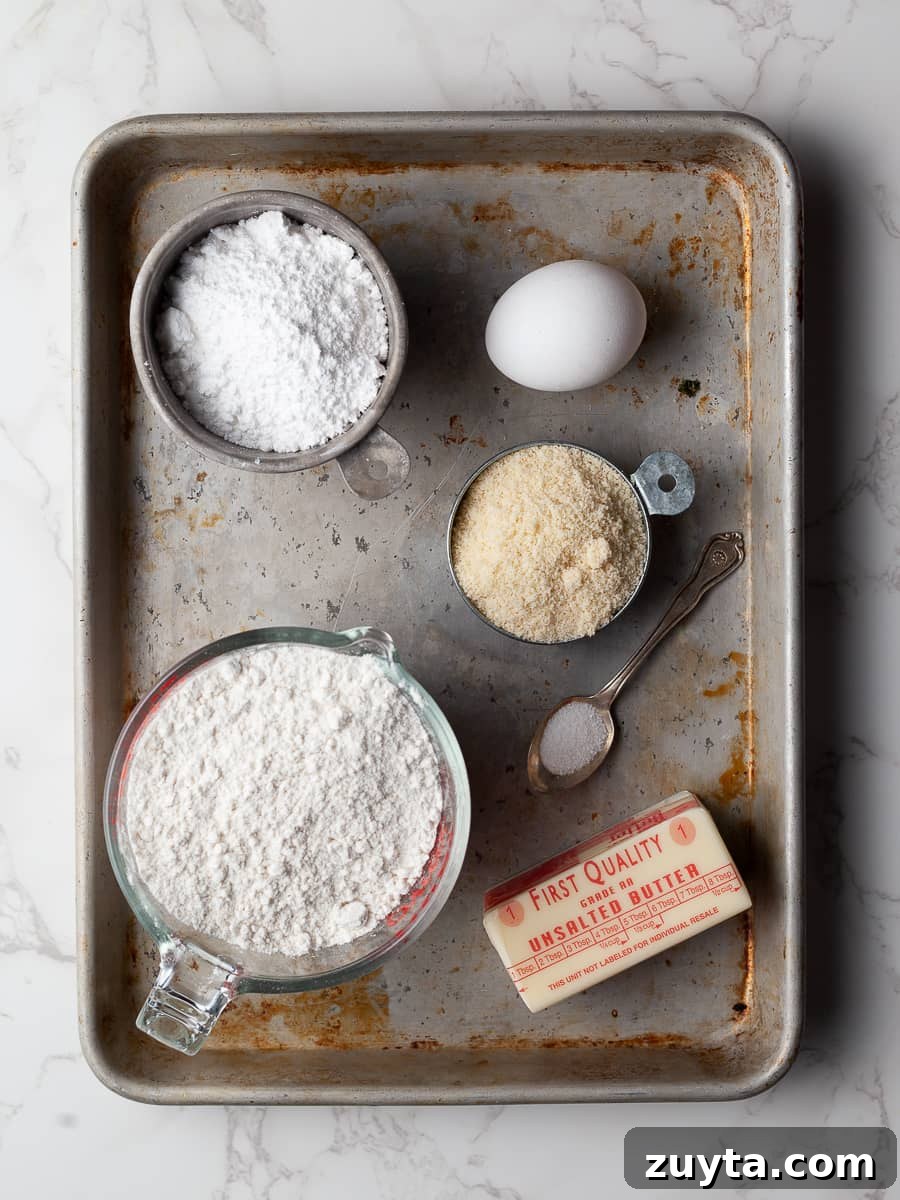
Gluten-free flour: I tested this dough with several commercial 1:1 gluten-free flour blends and a homemade blend. Many measured gluten-free blends work well; some produce a slightly lighter crumb than others. Choose a reliable all-purpose gluten-free blend you trust.
Almond flour: Almond flour adds richness and contributes to the tender, cookie-like texture of pâte sablée. If you need a nut-free version, substitute the almond flour with an equal weight of additional gluten-free blend (about 40 grams). Be sure to use finely ground almond flour rather than almond meal for the best texture.
Butter: Since butter is the star of this dough, use a good-quality unsalted butter for the most flavorful results.
Recipe Equipment Notes
You can make this tart dough in a food processor, a stand mixer, or by hand. I prefer the food processor for speed and minimal cleanup. If working by hand, use a pastry cutter or your fingertips to blend the butter into the dry ingredients.
For rolling, a rolling pin is best; a clean wine bottle will work in a pinch. For baking tart shells, pans with removable bottoms are especially convenient.
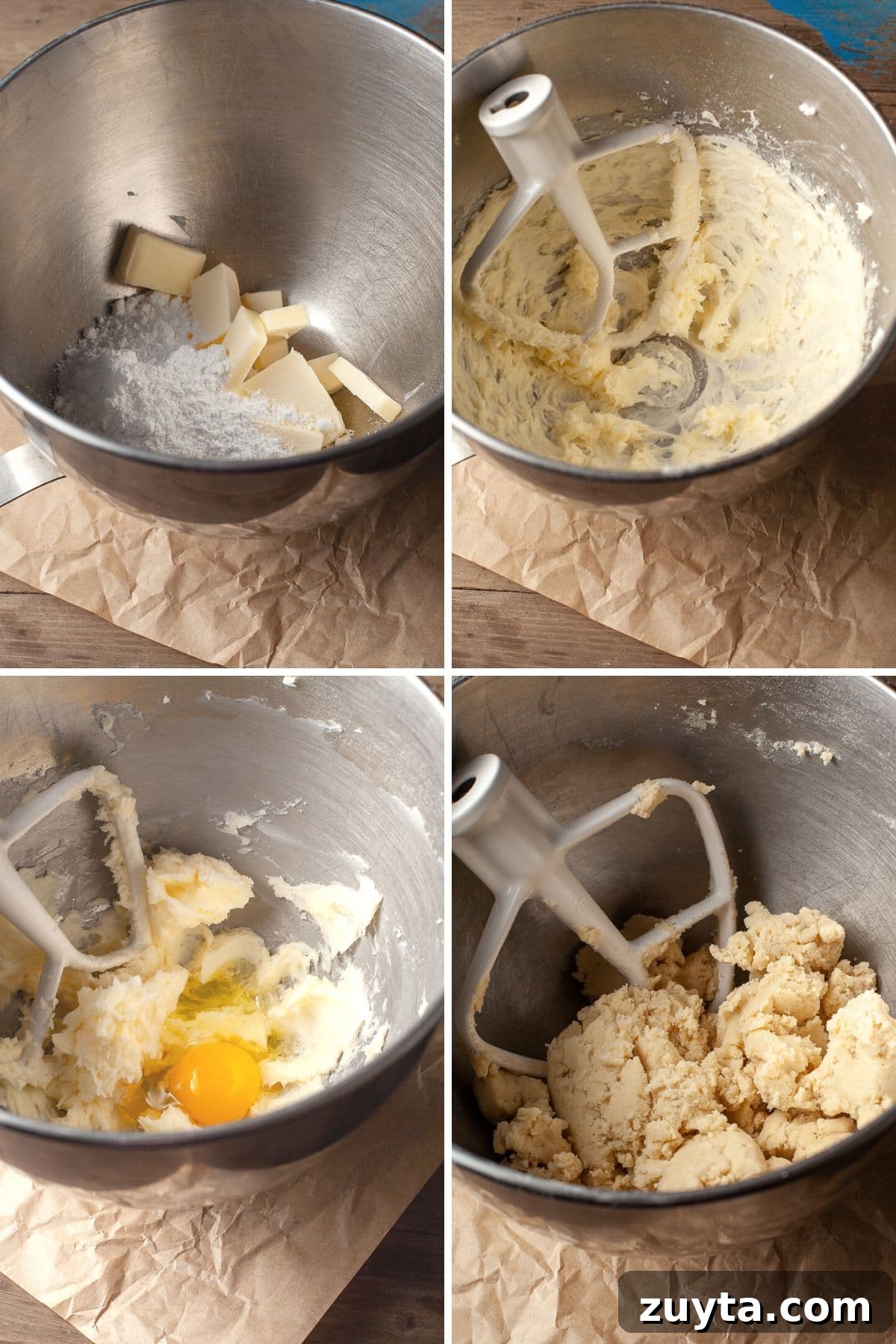
How to make Gluten Free Tart Crust with a Stand Mixer
Bring the butter and egg to room temperature before starting. Room-temperature ingredients help the dough achieve a sandy, tender texture and lead to a delicate baked crust.
Step 1: In a small bowl, whisk together the gluten-free flour, almond flour, and kosher salt. Set aside.
Step 2: In the stand mixer bowl fitted with the paddle attachment, combine the room-temperature butter and powdered sugar. Cream just until smooth—avoid overmixing.
Step 3: Scrape down the bowl, add the room-temperature egg, and mix until combined.
Step 4: With the mixer on low, add the dry ingredients and mix only until the flour is incorporated and no dry streaks remain.
Step 5: Turn the dough out onto parchment, gather it into a disk about 1 inch tall, wrap tightly, and chill for at least 2 hours and up to 2 days.
How to make Gluten Free Pâte Sablée in the Food Processor
This method is quick. The dough will be soft after mixing but firms up in the refrigerator, making it easy to roll and shape.
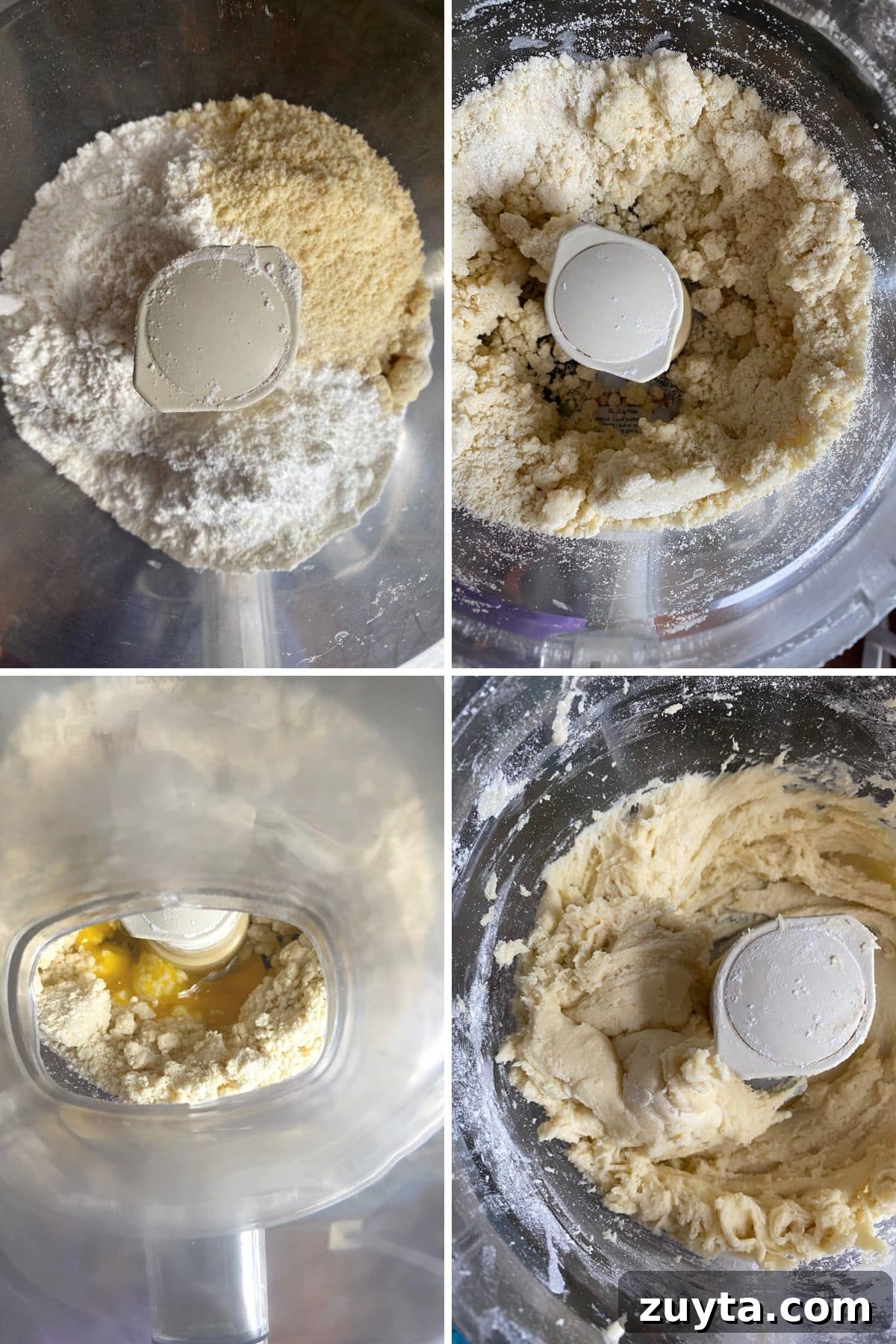
Step 1: Place the gluten-free flour, almond flour, powdered sugar, and salt in the food processor and pulse 10–15 times to combine.
Step 2: Add the room-temperature butter, cut into pieces, and pulse another 10–15 times until the mixture resembles coarse crumbs.
Step 3: Run the processor for about 10 seconds, then add the whole egg through the feed tube and blend for an additional 5–10 seconds until the dough comes together.
Step 4: Transfer the soft dough to a sheet lined with parchment, shape it into a 1-inch-tall disk, wrap tightly, and chill for at least 2 hours or up to 2 days.
How to assemble Tart Shells
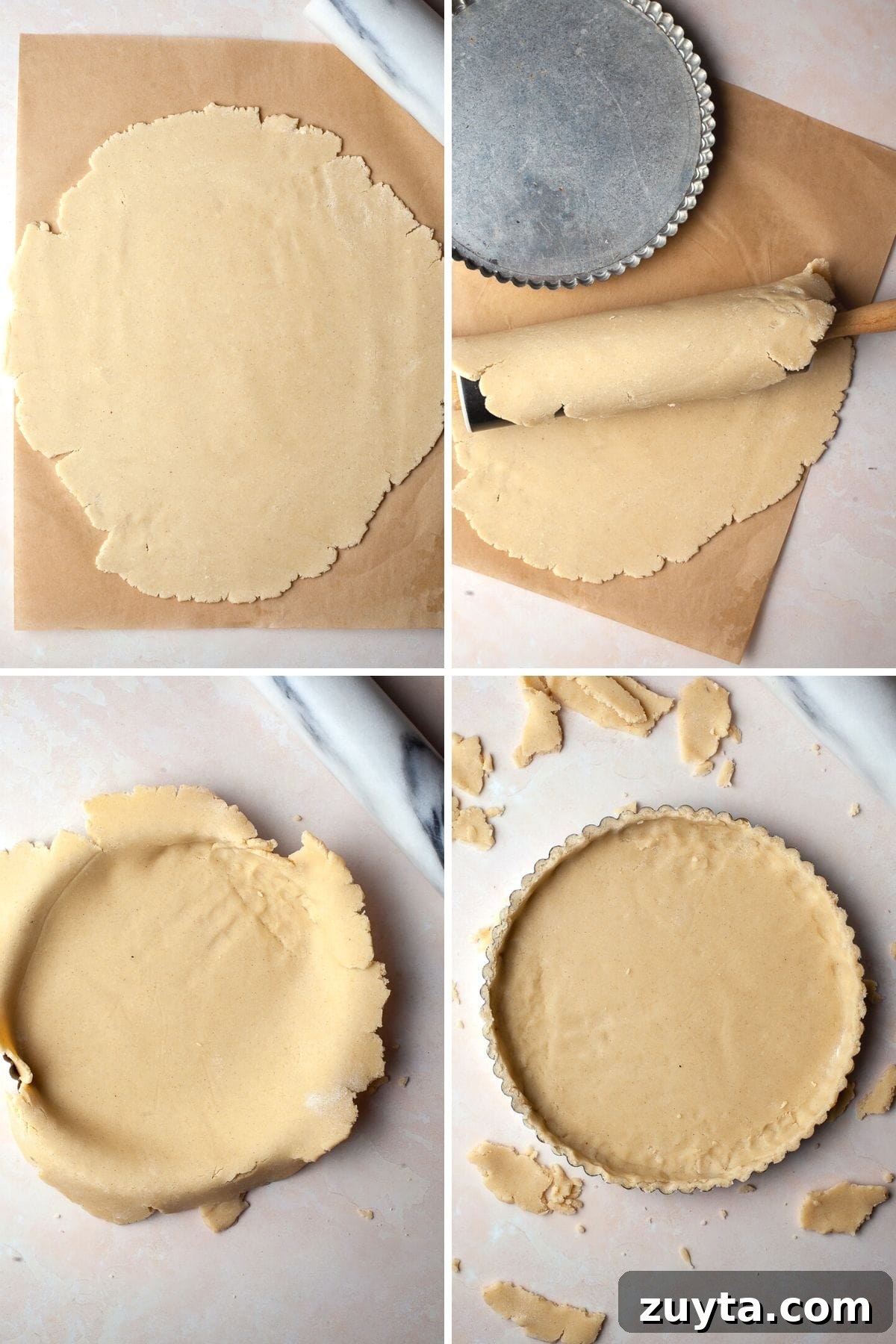
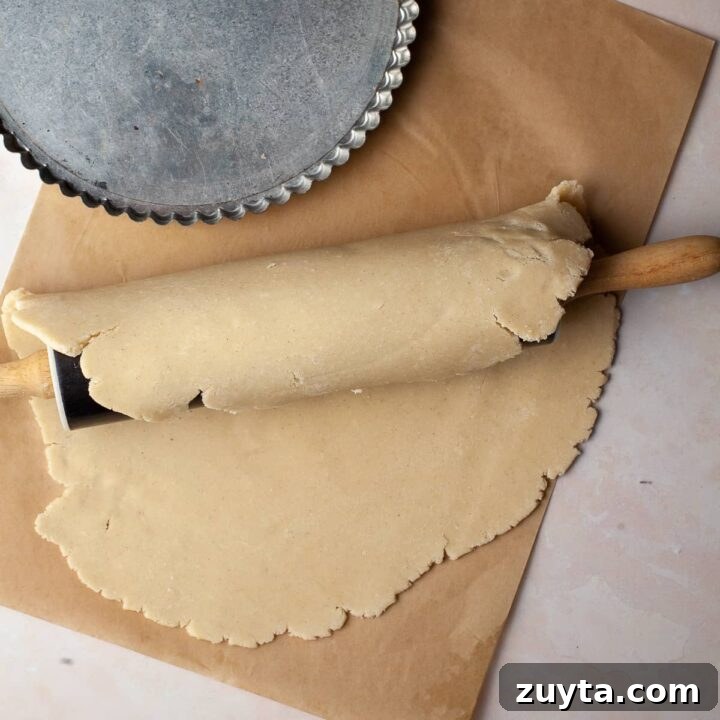
Roll chilled dough between two sheets of parchment paper. If too firm, let it sit 10–15 minutes at room temperature. Roll from the center outward, rotating the parchment every few rolls for an even thickness. If the dough sticks, dust lightly with gluten-free flour.
Target thickness: 1/8 to 1/4 inch (about 3–6 mm).
Cut a circle slightly larger than your tart pan, then gently press the dough into the pan. Push the dough into the corners and sides, trim excess dough with a knife or your fingers, and leave a small overhang (about 1/4 inch) to allow for slight shrinkage during baking.
Chill assembled tart shells in the refrigerator for 30 minutes before blind baking. You can shape shells up to three days ahead or freeze them for up to three months. Dough scraps can be re-rolled 2–3 times; beyond that the crust may become tough.
How to blind bake tart shells
Blind baking gives the crust a head start so it stays crisp once filled. This process does not fully bake the shell but prevents sogginess from wet fillings.
Step 1: Preheat the oven to 350°F (175°C) and position the rack in the center.
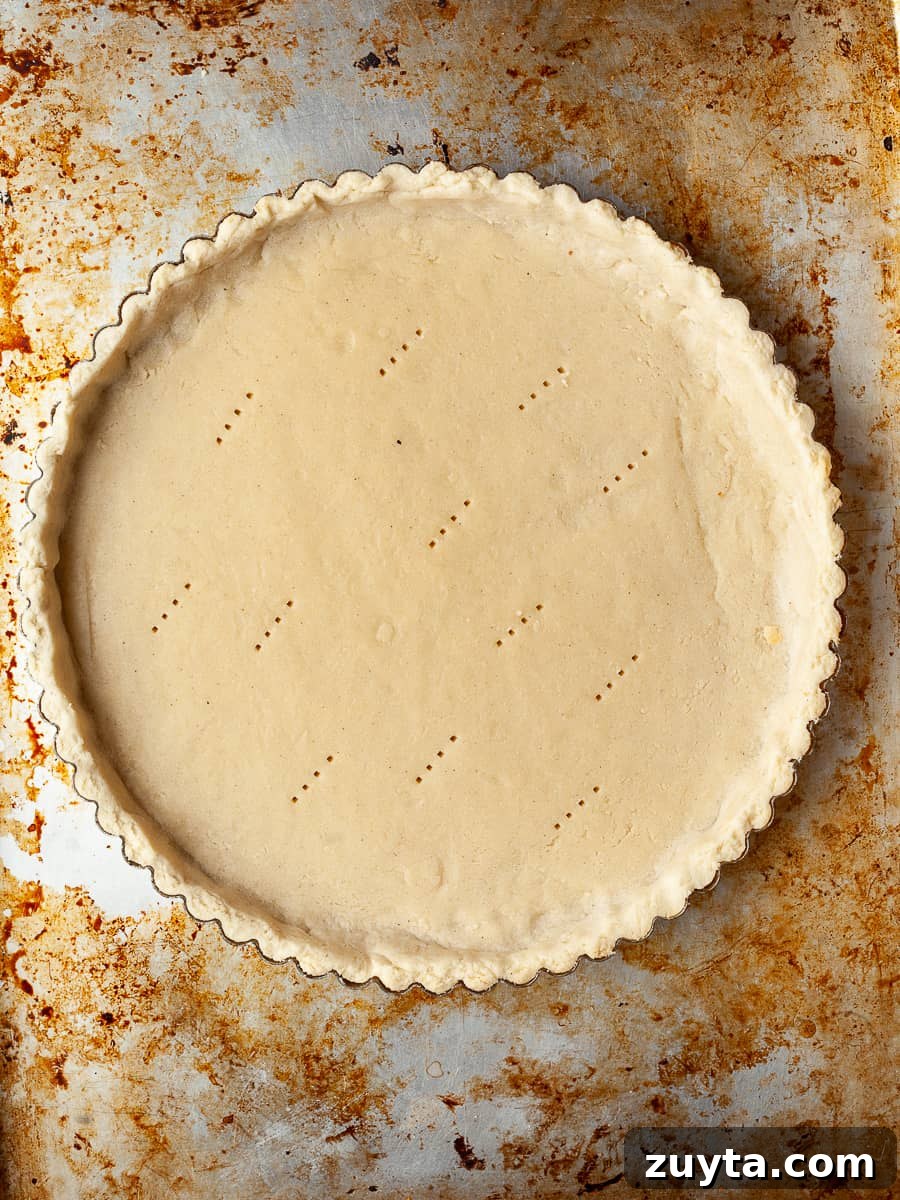
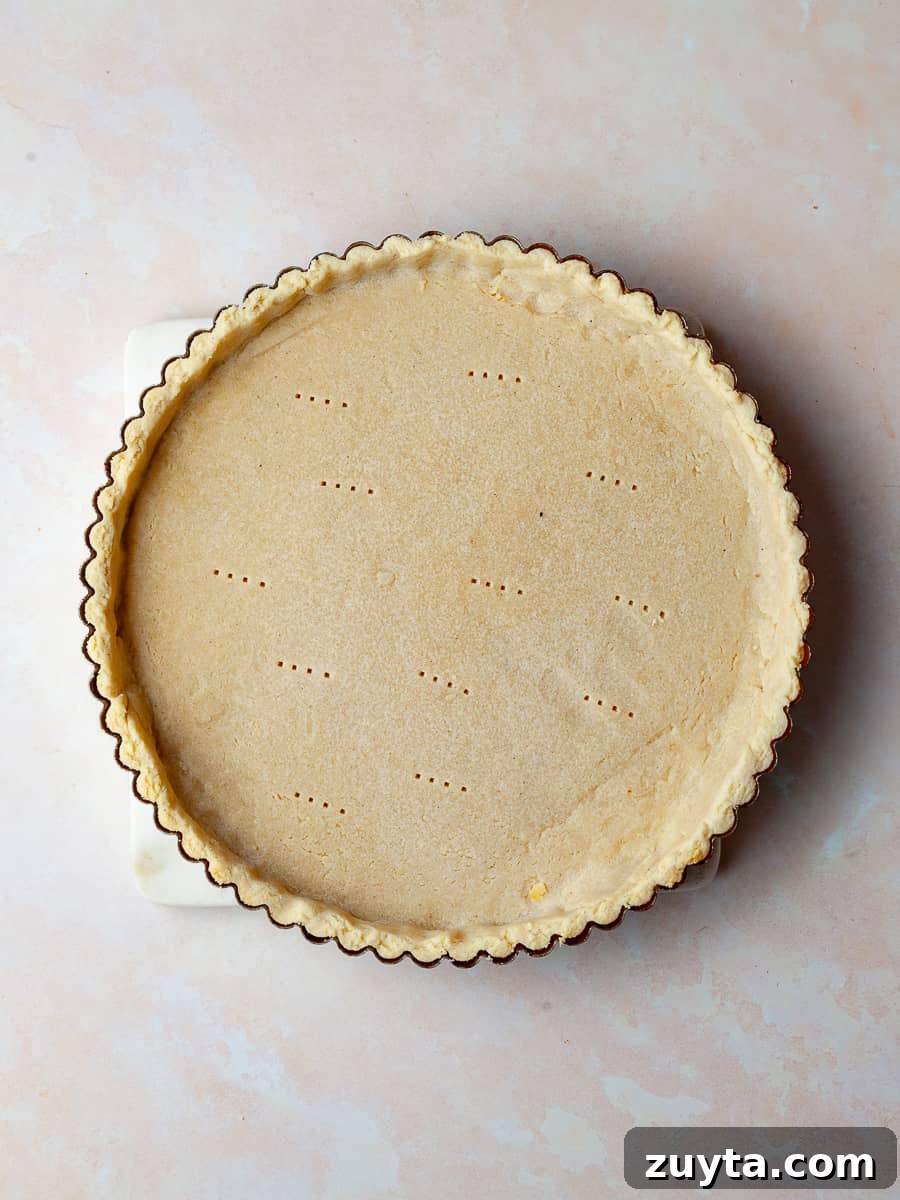
Step 2: Prick the bottom of the chilled tart crust several times with a fork to release trapped air.
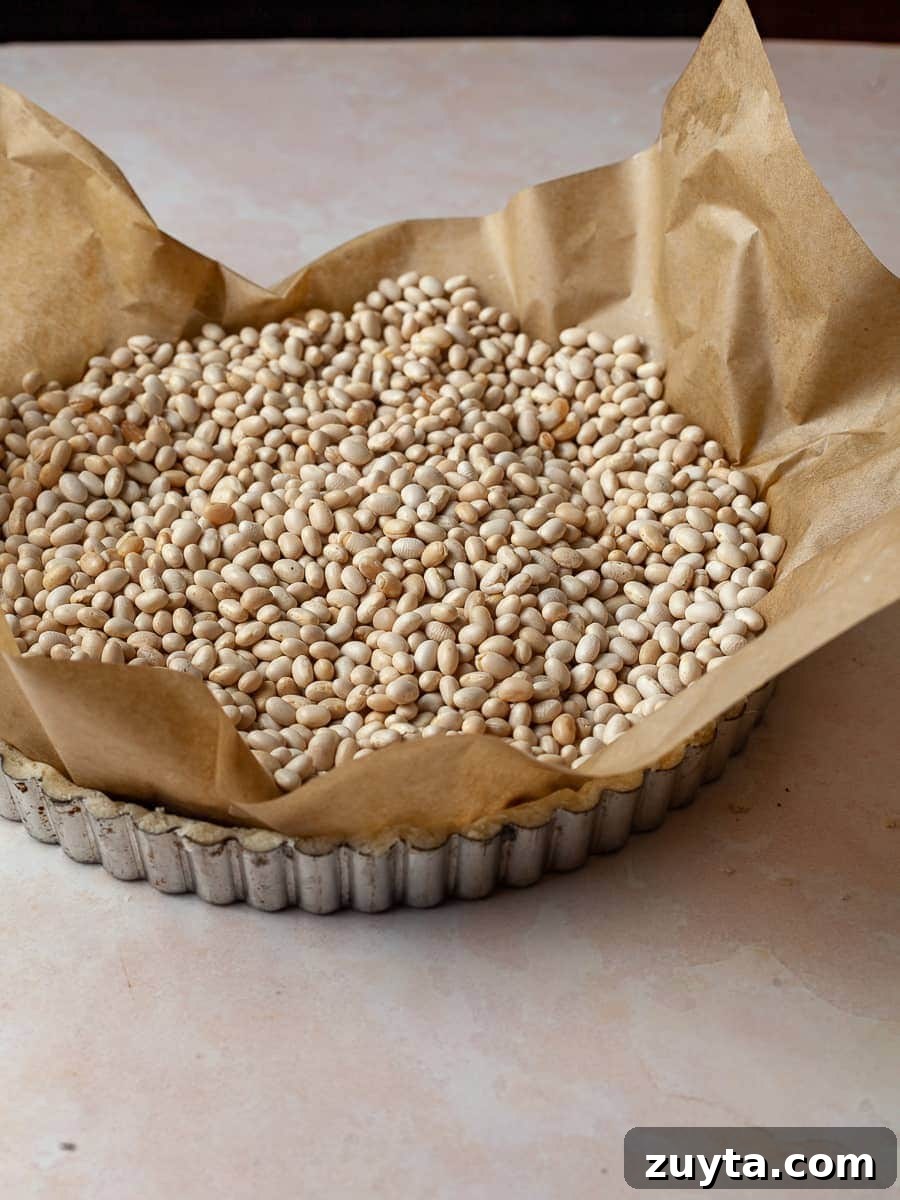
Step 3: Line the shell with parchment or foil, covering the edges, and fill evenly with pie weights, dried beans, or rice.
Step 4: Bake for about 15 minutes, remove the weights and liner carefully, then return briefly if the center still looks wet or underbaked. Allow shells to cool on a wire rack before filling.
FAQ about Gluten Free Tart Crust Recipe
Pie crusts are often made with cold butter and handled minimally for a flaky result. Tart crusts like pâte sablée use room-temperature butter and produce a more cookie-like, tender texture.
Common causes are incorrect measuring, overworking the dough, or overbaking during blind baking. Check measurements and handle the dough gently; adjust blind-bake time for smaller or larger shells.
A tart-specific dough such as pâte sablée is ideal for tart shells because of its tender, short texture that holds fillings well.
Note about Salt in my Recipes
I use a coarse kosher-style crystal salt in my recipes unless otherwise noted. Different brands and types of salt vary in intensity and crystal size. If you switch salts, adjust the quantity to taste—some salts are denser and saltier by volume.
Baking in grams
I publish recipes by weight because weighing ingredients gives far more consistent results than measuring by volume. A small digital kitchen scale is inexpensive and makes baking more reliable, especially with gluten-free flours that vary in density compared to wheat flour.
Note about Ovens and Oven Temperatures
All recipes are tested in a conventional oven with the rack set in the middle. Convection ovens run hotter and can dry baked goods faster; reduce temperature or time when using convection. Oven thermometers are helpful for confirming true oven temperature.
Substitutions and Modifications
Altering ingredients may change texture and flavor. I test recipes as written; if you make substitutions for dietary needs, expect some variation in the final result.
📖 Recipe
Gluten Free Pâte Sablée
A classic French-style gluten-free tart dough with a tender, melt-in-your-mouth texture. Great for fruit tarts and other sweet fillings.
20 minutes
2 hours
2 hours 20 minutes
Ingredients
For the GLUTEN FREE PÂTE SABLÉE
- 240 grams gluten-free all-purpose flour
- 40 grams finely ground almond flour
- 75 grams powdered (confectioners’) sugar
- 1/8 teaspoon kosher salt
- 113 grams unsalted butter, room temperature, cut into pieces
- 1 large egg, room temperature (about 60 grams)
Instructions
Food Processor Method
- Place gluten-free flour, almond flour, powdered sugar, and salt in the processor. Pulse 10–15 times to combine.
- Add the butter pieces and pulse another 10–15 times until the mixture looks like coarse crumbs.
- Run the processor for about 10 seconds, then add the egg through the feed tube and blend 5–10 seconds until the dough just comes together.
- Turn the dough out onto parchment, press into a 1-inch disk, wrap, and chill for at least 2 hours before rolling.
- The dough can be prepared up to 3 days ahead or frozen for up to 3 months.
Stand Mixer Method
- Whisk the gluten-free flour, almond flour, and salt in a bowl and set aside.
- Cream the room-temperature butter and powdered sugar in the mixer fitted with the paddle until smooth.
- Scrape the bowl, add the egg, and mix until combined.
- With the mixer on low, add the dry ingredients and mix only until no dry streaks remain.
- Form the dough into a disk on parchment, wrap, and chill for at least 2 hours or up to 2 days.
Nutrition Information:
Yield:
1
Serving Size:
1
Amount Per Serving:
Calories: 100 (estimate)
Calories are an estimate.