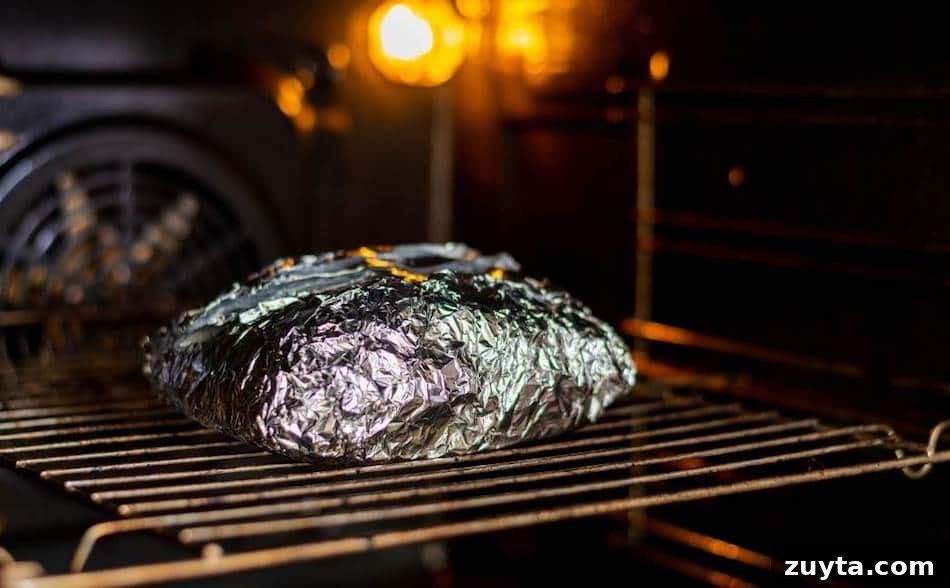
Smoking a brisket to tender perfection is a time-honored process, and finishing it in the oven after the smoker helps you achieve a reliably juicy, tender result. Moving the meat indoors for the final stage saves fuel, simplifies timing, and makes overnight or late-night cooks much more manageable. I researched the technique and tested it myself to see how oven finishing affects texture and flavor.
When a brisket reaches the wrapping stage it should have a well-formed bark and an internal temperature near 150°F. At that point you can remove it from the smoker and finish it in a conventional oven set around 220–250°F without sacrificing flavor or quality. The final goal is to bring the meat to roughly 200–205°F (commonly targeted as 203°F) without drying it out. Here are the key points to keep in mind.
A full brisket cook is a long undertaking and will use a significant amount of charcoal, pellets, or propane. Depending on the size and style of the brisket, the process can last 12 to 24 hours. That means extended periods outdoors monitoring the smoker unless you choose to finish the cook inside.
Finishing in the oven reduces fuel consumption and frees you from constant attention to the smoker. It also gives you finer control over temperature toward the end of the cook, which helps avoid overshooting the final internal temperature.
Why Finish Brisket In The Oven?
- Smoking brisket is a long process, often 12–24 hours, and consumes substantial fuel.
- Finishing in the oven conserves fuel and simplifies time management for long cooks.
- Oven finishing will not negatively affect flavor if the oven is kept low, around 220°F.
- Testing and experience help determine the best balance between smoke exposure and final oven time.
| Benefits of finishing brisket in the oven | Considerations when finishing brisket in the oven |
|---|---|
| Saves money on fuel | Maintain a low oven temperature, about 220–250°F |
| Easier time management | Use a remote thermometer to monitor internal temperature |
| Generally safer than leaving a smoker unattended | Ensure smoke alarms, timers, and thermometers are in place |
| Wrap brisket before finishing to retain moisture | |
| Goal: reach about 203°F without drying the meat |
How to Finish a Brisket in the Oven: Step-by-Step
Preheat your oven to 250°F (some pitmasters use 220°F; both are acceptable as long as the heat is steady). Remove the brisket from the smoker once it has developed a solid bark and reached roughly 150°F. Tightly wrap the brisket in a double layer of foil or butcher paper to trap juices and create a braising environment.
Place the wrapped brisket on a roasting pan or sheet and transfer it to the oven. Plan for several hours—approximately 2–4 hours is typical depending on brisket size and how much cooking remains. Use a probe thermometer to monitor the internal temperature. The target for a fully tender brisket is around 200–205°F, or when a probe slides in with little resistance.
When the brisket reaches the desired temperature, remove it from the oven and allow it to rest for at least 30 minutes before unwrapping. Resting lets the juices redistribute and the meat relax, improving tenderness. For further convenience, you can hold a wrapped brisket in a dry cooler wrapped in towels for up to four hours.
Slice against the grain for the best texture and serve. This method combines the best of smoke flavor from the pit with the controlled, fuel-efficient finish that an oven provides.
The oven finish is particularly useful when you need to be sure the brisket is done by a certain time, or when weather and fuel costs make it impractical to run a smoker for the entire cook.
Can You Smoke Brisket Overnight In The Oven?
If a brisket has been smoked most of the day, it can be wrapped and finished in the oven overnight. Set the oven between 220–250°F and rely on a remote thermometer to notify you once the brisket reaches about 203°F. Finishing indoors reduces the risks and logistics of an unattended outdoor smoker during overnight hours.
Can You Sleep While Your Brisket is Smoking?
After shutting down the smoker, wrapping the brisket, and placing it in the oven with a remote thermometer, it is generally safe to sleep. Leaving a brisket unattended outdoors on a fuel-burning smoker carries more risk due to wind and fuel behavior. If you must leave a smoker running, use a reliable wireless thermometer and be confident in how your smoker behaves.
Finishing Brisket in the Oven Saves Fuel
A long brisket cook uses a lot of fuel—charcoal, pellets, or propane. By moving the wrapped brisket indoors for the final hours, you can significantly reduce fuel consumption. For frequent smokers, the savings add up.
Does Finishing in the Oven Change the Flavor?
Once the brisket reaches the wrapping stage, most of the smoke flavor has already developed, so finishing in the oven has little impact on taste. The unwrapped stage is where smoke absorption and bark formation occur. The wrapped stage is mainly about getting the internal temperature up while keeping the meat moist and tender.
Brisket Smoking Plans – Time Management
Brisket timing can be unpredictable because cooks are temperature-driven rather than time-driven. Allow for the stall (a plateau in internal temperature) and plan a window for resting. Aim to finish the brisket a few hours before you need to slice and serve, then hold it wrapped and insulated if necessary.
12–18 Hour Brisket Planner – Finished in the Oven
| Brisket Total Cook Time | Start Time | Begin Spritzing | Wrap Brisket | Finish in Oven | Done Time (≈203°F) | Holding Time (1–4 hours) |
| 12 hours | 6pm | 9pm | 12am | 12am | 6am | 7am–10am |
| 15 hours | 5pm | 8pm | 11pm | 11pm | 8am | 9am–12pm |
| 18 hours | 2pm | 5pm | 8pm | 8pm | 8am | 9am–12pm |
Is It Safe To Smoke A Brisket Overnight?
All smokers carry some fire risk and should be monitored. Electric smokers are the simplest to leave alone, while pellet, charcoal, and gas smokers require knowledge of their quirks. Grease buildup is the most common hazard—clean the firebox and grease pan before long unattended cooks. Use a reliable remote thermometer and be familiar with your equipment before attempting overnight unattended smoking.
The Unwrapped ‘Naked’ Brisket
During the unwrapped stage the brisket sits directly on the grill and absorbs smoke. Cold meat surfaces attract smoke, so the early hours add most of the smoke character. This stage also builds the bark: the rub, rendered fat, and surface moisture combine into a flavorful crust. Regular spritzing or mopping helps form the bark and cools the surface, slowing the cook to allow connective tissue to break down gradually.
The Wrapped Brisket
At about 150°F many pitmasters wrap the brisket in foil or butcher paper. Wrapping traps heat and steam, which accelerates passing the stall and keeps the meat moist. Low-and-slow cooking melts connective tissue into a gelatin-like texture that gives brisket its signature tenderness.
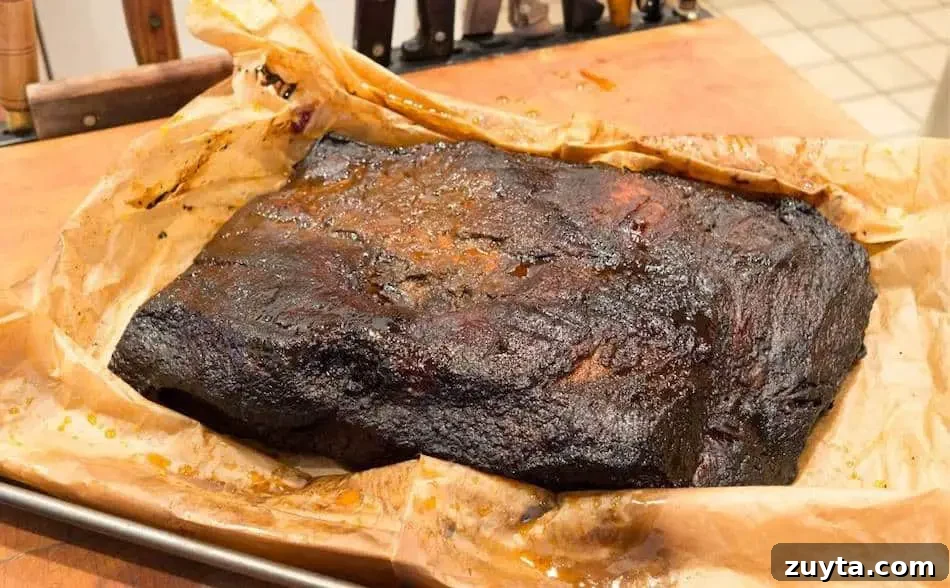
Using The Oven To Push The Brisket Through The Stall
The stall occurs when moisture on the meat surface evaporates and cools the exterior, halting the rise in internal temperature. Wrapping and moving the brisket into a steady oven environment traps heat and steam so the meat can progress toward the target temperature more predictably.
Holding Your Brisket – Resting
A wrapped brisket can remain hot for up to four hours if insulated in a dry cooler and towels. Because brisket cooks to temperature rather than time, plan for the stall and rest window so the meat is ready when you need it.
In Summary
- Set the oven between about 220–250°F and use a remote thermometer to monitor internal temperature.
- Brisket smoked most of the day can be wrapped and finished in the oven overnight.
- The objective is to reach around 203°F internal without drying the meat.
- Shutting off the smoker and finishing indoors simplifies timing and reduces fuel use.
- With proper precautions, a conventional oven is a safe, controlled environment for finishing brisket.
Smoked Brisket Finished In The Oven
10 minutes
12 hours
30 minutes
12 hours 40 minutes
Ingredients
- Rub recipe :
- Paprika – ½ cup
- Salt – ½ cup
- Brown sugar – ½ cup
- Garlic powder – ½ cup
- Onion powder – ¼ cup
- Chili powder – ¼ cup
- Cumin – ¼ cup
- Black pepper – 2 tablespoons
Instructions
- Trim the brisket, leaving approximately 1/4 inch of fat.
- Apply a binder (olive oil or yellow mustard) and coat the brisket with the rub on both sides.
- Preheat your smoker to about 225°F.
- Use hickory, pecan, or oak; mixing in apple or cherry wood softens the smoke flavor.
- Place the brisket on the smoker with the fat cap facing the heat source.
- Smoke the brisket for the first 3–4 hours, then start spritzing every 30 minutes as needed.
- Continue until the internal temperature reaches about 150–160°F and the bark firms up.
- Wrap the brisket tightly in foil or butcher paper once the bark is set and the rub no longer sticks to your finger.
- Shut down the smoker and preheat the oven to 250°F (or 220°F for a slower finish).
- Insert a probe thermometer into the brisket and cook in the oven until the internal temperature reaches about 200–205°F, or until probe-tender.
- Remove the brisket and rest for at least 30 minutes before slicing, or place the wrapped brisket in an insulated cooler for up to 4 hours.
Nutrition Information:
Yield:
12 to 15
Serving Size:
85g
Amount Per Serving:
Calories: 246Total Fat: 16gSaturated Fat: 6.2gCholesterol: 90mgSodium: 410mg
Recommended Brisket Tools
Below are practical tools that make smoking and finishing brisket easier. These are suggestions based on common pitmaster practice and personal experience—choose what fits your budget and needs.
Meat Injector: An injector distributes marinade and moisture into the meat for deeper flavor and juiciness. A stainless steel injector is durable and dependable.
Brisket Injection: Ready-made injections designed for brisket can add flavor and moisture. Choose one formulated for beef if you prefer not to mix your own solution.
Butcher Paper: Unwaxed food-grade butcher paper is excellent for wrapping brisket. It allows some breathability while preserving the bark and moisture.
Brisket Rub: A balanced rub of salt, sugar, paprika, garlic, onion, and black pepper works well. Adjust the ratios to match your flavor preferences.
Meat Thermometer: A reliable dual-probe thermometer allows you to monitor both smoker and meat temperatures. Wireless or remote-capable units are especially helpful for long cooks.
Instant-Read Thermometer: A fast, accurate instant-read is invaluable for checking doneness in multiple spots, especially during the final stages of cooking.
Advanced Monitor/Controller: If you frequently do long cooks, an advanced temperature monitor or controller can log data and help stabilize temperature for consistent results.