Trouble finding your ancestor’s birth record? Here are five common reasons why you can’t locate it and how to search more effectively. Practical genealogy tips to help you find that elusive birth record.
One of the most requested records in family history research is an ancestor’s birth record.
A frequent question from readers of Are You My Cousin? is, “Why can’t I find my ancestor’s birth record?”
Everyone has a birth date, but a formal birth record is not always easy to locate. When a straightforward search doesn’t turn up a birth certificate, change how you search rather than giving up. First, let’s look at common reasons you might not be finding that birth record.
Why You Are NOT Finding Your Ancestor’s Birth Record
Reason #1: Birth records were not required in that place or time period
Many researchers immediately look for a birth certificate, but state-level birth registration is relatively recent in many areas. Several states only began mandating statewide birth registrations in the early 1900s. Even after a law is passed, full compliance can take years, so certificates might not exist for every birth after the start date.
Examples of when some states began requiring statewide birth registration include:
- North Carolina – 1913
- West Virginia – 1917
- Colorado – 1907
- Ohio – 1908
- Vermont – records exist as early as 1857; widespread compliance generally reached by about 1919
- Texas – 1903
Because implementation varied by state and by county, your ancestor’s birth may not have been officially recorded at the time. For example, a birth might not be registered even several years after statewide registration began. Delayed birth certificates are another factor: some people obtained formal birth certificates decades later when proof of age was required for benefits, voting, or other official reasons.
Reason #2: Your ancestor changed their name
Name changes complicate searches. Some people legally changed their names through court actions; others simply began using a different name informally. If a legal name change is likely, check county court records and name-change petitions. If the change was informal, you will need to expand your search to include alternate names, nicknames, and even unlikely variants.
Family stories sometimes reveal these shifts. For example, a man might have been recorded at birth with one name but later adopted a completely different given name or nickname. Oral history, family records, and probate or land documents can expose these alternate identities.
Reason #3: Transcription and indexing errors hide records
Poor handwriting, faded documents, low-quality scans, and inconsistent spelling all lead to transcription mistakes when records are indexed. An ancestor’s name can be misentered or garbled, making a straightforward name search fail.
Search strategies to overcome transcription errors:
- Search using only the surname or only the given name combined with birth year and gender.
- Search all males (or all females) born on a specific date in a county or town.
- Search by parents’ names plus an approximate birth year.
- Use wildcard and phonetic search options where available to capture alternate spellings.
A creative, flexible search approach can often recover records that rigid queries miss.
Reason #4: You’re searching the wrong place
We often assume an ancestor was born in the town where the family lived, but births frequently occurred elsewhere. A mother might travel to stay with relatives before or after a birth, giving birth in a neighboring county or even across a state line. Consider hospitals, midwives’ locations, and kin who may have provided support during childbirth, and expand your geographic search accordingly.
Reason #5: You assumed a family Bible or private record doesn’t exist
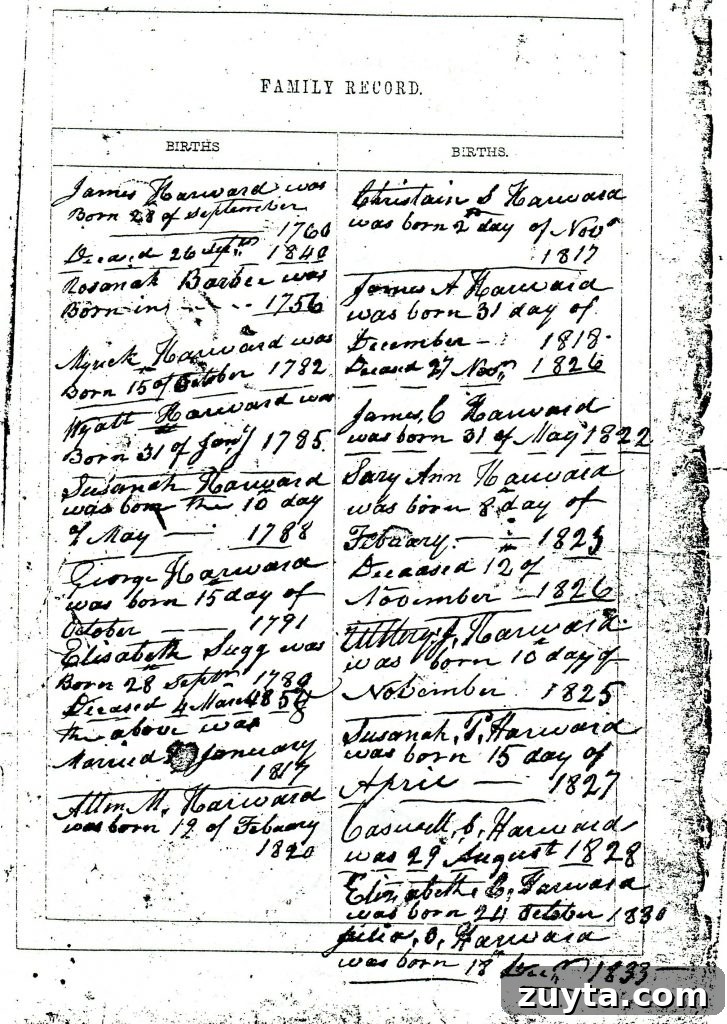
Family Bibles and other privately kept records are often the only source of vital dates for earlier generations. Don’t assume these records only exist on your direct line. A Bible or family record may survive in a collateral line (a cousin’s branch) or among descendants who live elsewhere.
For example, a family Bible that documents births back into the 1700s can provide the crucial evidence needed to prove relationships and dates when official records are missing. Collateral-line research—contacting distant cousins or researchers working on related families—can reveal these hidden sources.
Now what?
There are many reasons a birth record may not appear in a simple search. Don’t give up too quickly. Be persistent and systematic in your research.
Try wildcard and phonetic searches, expand the places you search, and follow collateral lines. Reach out to extended family members and cousins you haven’t contacted before—oral history and privately held documents can be invaluable.

Stretch beyond your comfort zone: investigate neighboring counties, search court and church records, look for delayed birth registrations, and pursue family-held documents. With patience and a broader approach, you can often locate the vital information you need.
You can do this!
Keep Learning:
Other posts of interest:
- Find Alternatives to Vital Records When Birth Records (and others) Cannot Be Found
- Your Guide to Finding an Ancestor’s Date of Death
- How to Confidently Research Your Ancestor’s Marriage Records