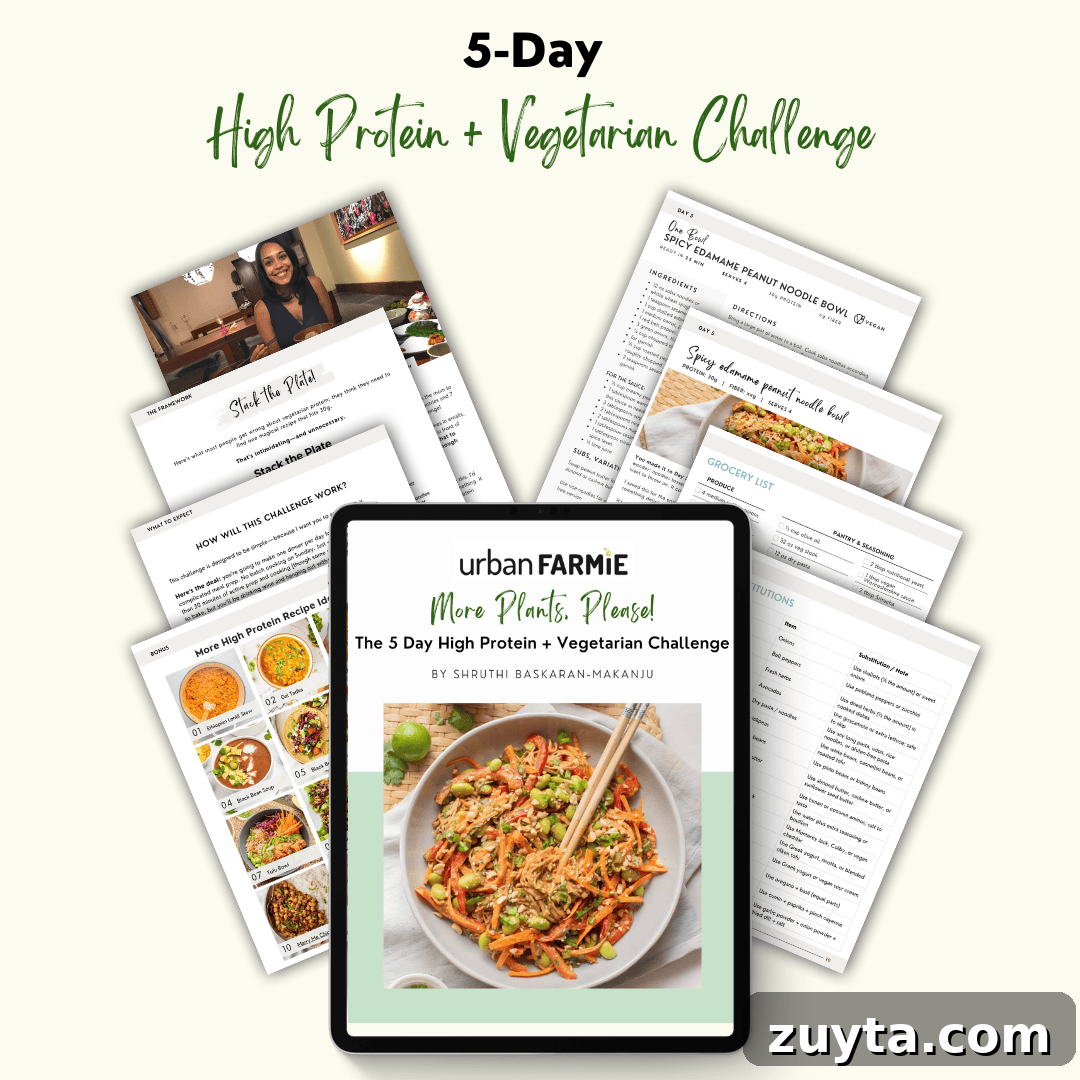
Wondering how to meet your protein needs on a vegetarian diet without spending hours in the kitchen or counting calories? This five-day meal plan is part of the “More Plants, Please!” challenge and shows how to build satisfying, protein-rich dinners using the simple Stack the Plate framework. The approach focuses on combining a clear source of protein with vegetables and a complementary carbohydrate or healthy fat so each dinner delivers 25g or more of protein—no complicated ingredients, no strict calorie tracking.
Meal Plan
This family-friendly meal plan was designed for busy households that want easy, high-protein meatless meals everyone will enjoy. The recipes emphasize widely available, affordable ingredients—lentils, beans, tofu, tempeh, eggs, dairy and whole grains—arranged so each plate is balanced, flavorful, and reliably protein-forward. The Stack the Plate framework helps you see how to build each meal quickly: pick a primary protein, add a pile of vegetables, include a grain or starch for energy, and finish with a small portion of healthy fat or a garnish for texture and flavor.
Why this approach works: many people assume vegetarian meals are low in protein, but with intentional combinations you can consistently hit protein targets at dinner. Rather than obsessing over numbers, Stack the Plate gives a visual, repeatable method to assemble meals that satisfy both on taste and nutrition. It’s ideal for weeknights when you want simple instructions and predictable results.
What to expect from the five-day plan: five complete dinner ideas that are adaptable to different tastes and dietary needs, practical tips for swapping ingredients, and guidance on batch-cooking or using leftovers to save time. The meals are tested for family appeal and can be scaled for two people or a larger household. Each recipe highlights the protein source and includes suggestions to boost protein if you need more, such as adding seeds, Greek yogurt, or an extra portion of legumes.
Typical protein sources featured across the plan include lentils and other legumes, tofu and tempeh, eggs and dairy, seitan where appropriate, and whole grains like quinoa. These ingredients are combined with seasonal vegetables and pantry staples so you can shop once and use items across multiple dinners. The plan also covers easy seasoning strategies and simple swaps to keep flavors varied without extra complexity.
If you want deeper support beyond the five dinners, the full companion eBook expands on the framework with a complete shopping list, step-by-step technique videos to improve speed and confidence in the kitchen, and a 30-page guide that explains protein needs, meal composition, and practical tips for adapting to picky eaters or food sensitivities. The resources are focused on helping you build sustainable habits so plant-forward eating feels doable and enjoyable every week.
Practical tips to get started right away: plan two or three main protein elements for the week (for example, a batch of cooked lentils, a pan of baked tofu, and a tray of roasted chickpeas), prep a few chopped vegetables, and portion out grains so assembly is fast at dinner time. Use simple sauces and seasonings to create variety—soy-ginger, tomato-herb, and curry-spiced blends all work well with the same base ingredients. When in doubt, add a handful of toasted nuts or a spoonful of cottage cheese or Greek yogurt to increase protein and creaminess.
This meal plan is made to be adaptable: swap ingredients depending on what’s in your pantry, scale recipes to feed more people, and use leftovers creatively for lunches. The goal is practical, realistic vegetarian eating that supports protein goals and keeps family meals enjoyable without extra stress.